Comparative Analysis of Institutional Survivors and Maternal Psychodynamics in Post-War Austria
Comparative Analysis of Institutional Survivors and Maternal Psychodynamics in Post-War Austria
The biographies of Franz Josef Stangl, Robert Volek, Peter Siegfried Krug, and Helmut Oberhauser constitute a traumatic triad, illustrating the brutal continuity between familial uprooting and institutional violence in post-war Austria. These individuals were not merely victims of state failure but primarily of a profound maternal inability to provide psychic resonance, rooted in transgenerational trauma and structural deficiencies.
Biographical Profiles and Institutional Paths
Franz Josef Stangl: Born on July 17, 1952, in Graz as an illegitimate child. Following rejection by foster parents, he was institutionalized at age eleven, passing through institutions in Graz, the Caritas facility Gleink, and the Landesjugendheim Korneuburg. Released at 18 as "uneducable," his path led to homelessness and criminality.
Robert Volek: Born around 1952 in Vienna. He lived in total institutions from birth, including Vienna infant homes and the notorious Kinderheim Wilhelminenberg, until adulthood. His biography is marked by a lifelong struggle with the psychical consequences of abuse and a later career as an activist.
Peter Siegfried Krug: Born on November 23, 1966, in Salzburg. He spent his early childhood in an infant home and later in the Projuventute children's village in Guggenthal, before experiencing severe abuse in a foster family in Salzburg-Liefering. His life is dedicated to the radical digital documentation of this trauma.
Helmut Oberhauser: Born on January 10, 1949, in Vienna. Following the deprivation of parental rights, he passed through the Kinderübernahmestelle (KÜST), a home run by nuns, and the Heilpädagogische Beobachtungsstation Wilhelminenberg. He became a significant activist, author, and artist before his death in 2018.
The Maternal Core: Structure, Trauma, and Projective Identification
The mothers of these institutional survivors shared a structural inability to perceive their children as independent subjects, instead utilizing them as recipients for their own unprocessed traumas and fragmented egos.
Maternal Structure and PTBS: The mothers, including Herta Brigitte Bertel (Krug) and Oberhauser's unnamed mother, frequently displayed a "panzer-like" ego protection, characterized by emotional numbness (numbing) indicative of post-traumatic stress disorder (PTBS). This numbness was not merely passivity but a functional, fragmented ego structure unable to provide mirroring. For Oberhauser's mother, criminality and imprisonment formed the background, while for Bertel, a "bourgeois camouflage" hid deep-seated structural shame.
Rejection and Dismissal: The treatment of the children was uniformly abject. Volek and Oberhauser were subjected to active rejection and dismissal, declared scapegoats for the mothers' social failures. Krug experienced "identitary robbery," where the mother actively erased his paternal origin to protect her own social standing. Stangl's mother remained in systemic submission, unable to protect her illegitimate child from institutionalization.
Projective Identification: This mechanism was central to all maternal relationships. The mothers unconsciously displaced their own unbearable feelings—such as self-hatred, shame, or fear of annihilation—onto their children. By perceiving the child as a "psychic container" for their own trauma, they validated their own hardness as necessary survival. The child was not loved but served as a reminder of the mother's vulnerability or disgrace.
Transgenerational Impact and Outcome
The impact of this maternal coldness was devastating. The children learned that their own feelings were dangerous or worthless, leading to a "narcissistic void" in their ego structure. They were treated abjectly, frequently abused, and systematically detached from their families.
Institutional Violence: The institutions functioned as the material continuation of this familial coldness. The violence experienced within the homes—characterized by "black pedagogy"—was the systemic fulfillment of the initial maternal abandonment.
Life Paths: The outcomes for the children varied but were uniformly marked by the necessity of struggle. Stangl fell into criminality and addiction. Volek and Oberhauser, driven by the need to reconstruct their shattered identities, achieved a degree of social stabilization through immense discipline—Oberhauser notably becoming a department head and artist, using art as a therapeutic strategy ("Die blaue Decke"). Krug dedicated his life to the objective documentation of this trauma. Ultimately, these individuals transformed their private suffering into a societal mission, breaking the silence surrounding institutional abuse and challenging the protecting structures of perpetrators.
The Burden of Shame: Franz Josef Stangl and the Maternal Refusal of Being
The biography of Franz Josef Stangl, born on July 17, 1952, in Graz, is profoundly shaped by the maternal inability to accept his existence. His mother's actions and psychical structure set the stage for a lifetime of institutionalization and social marginalization, demonstrating the devastating impact of maternal coldness rooted in social shame.
The Maternal Structure: Shame and Survival
The mother of Franz Josef Stangl operated within an infantile survival mode driven by deep social shame. Being an unmarried mother in the 1950s carried a stigma that threatened her ego integrity. Her psychical structure was incapable of processing this situation, leading to a radical dissociation of her maternal feelings.
Projection of Unworthiness: Through projective identification, the mother displaced her own feelings of social inferiority and shame onto the child. Stangl was not perceived as a subject deserving of love, but rather as a concrete manifestation of her own "failure" and a threat to her potential for social validation.
Narcissistic Defense: To protect her fragile ego from collapse, she developed a hard outer shell, characterized by total emotional unavailability. Her defense mechanism necessitated the removal of the child from her life to maintain the illusion of a life untainted by the illegitimate birth.
The Impact on the Son: A Lifelong Void
The maternal refusal had immediate and devastating consequences for Franz Josef Stangl, manifesting as a profound narcissistic void in his own personality structure.
Identitary Robbery: By delegating the child to foster care at the age of five—and subsequently allowing him to be passed on to institutions because he was deemed a "bad child"—she perpetuated an "identitary robbery." Stangl was denied genealogical anchoring and the essential mirroring required to develop self-worth.
Internalization of Worthlessness: Stangl internalized the maternal coldness as evidence of his own worthlessness. The labeling as "bad" by both foster parents and the mother validated his belief that he was dangerous or unlovable.
The Search for Recognition: The lifelong struggle with criminality, alcoholism, and homelessness was a direct result of the lack of a stable ego center. Stangl's eventual literary work, including "Der Bastard," served as a belated attempt to symbolise his suffering and regain a sense of self-recognition that the maternal mirror had denied him.
Conclusion
The mother of Franz Josef Stangl remained trapped in her own defense mechanisms until the end, unable to walk the path of reconciliation. Her inability to symbolize her shame forced the burden of her unprocessed trauma onto her son, whose life became a testament to the timelessness of the unconscious and the devastating power of maternal refusal.
The Bourgeois Camouflage: Herta Brigitte Bertel and the Narcissistic Defense of Repression
The life of Herta Brigitte Bertel (born Krug, 1943–2024), the mother of Peter Siegfried Krug, provides a striking study in the structural inability to process trauma. Her life was defined by the relentless construction of a narcissistic facade, utilizing social ascent and bourgeois respectability as a rampart against the shame of her origins.
Maternal Structure: The Infant Survival Mode and the Panzer
Herta Bertel’s psychical structure was formed in the extreme emotional and physical deprivation of rural post-war poverty. Her childhood, characterized by harsh labor in a stable and profound neglect, necessitated the development of a "panzer-like" narcissistic armor.
Infantile Survival Mode: Bertel remained trapped in this mode throughout her life. Her ego was too fragile to integrate pain or vulnerability; therefore, any form of reflection was perceived as a life-threatening attack on her psychical survival.
Narcissistic Elements: Her personality was characterized by a high need for control and the inability to empathize with her son, Peter. The child was not viewed as a subject with his own needs, but as a potential threat to her fragile self-image.
The Mechanism of Projective Identification
Unable to process her own shame regarding her background and her illegitimate child, Bertel utilized projective identification on a massive scale.
Delegation of Shame: She unconsciously displaced her own feelings of unworthiness, rage, and self-hatred onto her son. By treating Peter as a "psychic container" for her own unbearable inner state, she maintained her own hardness and sense of control.
Erasure of Origin: The "identitary robbery"—erasing the existence of the biological father (Dr. Peter Strobl) and isolating the child in institutions—was a defense mechanism to sanitize her past and protect her carefully constructed self-concept.
Social Ascent as a Protective Wall
The marriage to Dr. Michael Bertel and the acquisition of a bourgeois property (Eigentumswohnung) were not merely milestones of success, but essential components of her protective wall.
Bourgeois Camouflage: Bertel utilized this "camouflage" to hide her deep psychological distress behind a facade of stability and status. The prestigious environment functioned as a guarantee that her "stable origin" would remain invisible.
Acting Out through Physical Achievement: Climbing 400,000 meters in altitude served as a form of motor acting out. It was a high-level affect regulation that allowed her to physically "work away" pain and avoid the silence that might have forced self-knowledge.
The Refusal of Aufarbeitung: Why 80 Years of Silence Prevailed
Herta Bertel never underwent an Aufarbeitung (processing) of her trauma, nor did she ever seek to reconcile with her son.
The Fear of Annihilation: For Bertel, acknowledging the truth would have meant the total collapse of her identity. If the armor broke, the repressed shame and pain would have flooded her, leading to what she perceived as psychological death.
Stabilization of the Facade: The social environment enabled her rise, providing external validation that reinforced her defense mechanisms. A perfectly functioning defense is the greatest obstacle to healing; since her facade held until the end, there was no external pressure to break it.
Timelessness of the Unconscious: Unprocessed traumas do not age in the psyche. The trauma of her rural childhood remained active until her death in 2024, dictating her behavior and preventing the symbolization of her suffering.
The Total Absence: Robert Volek and the Maternal Failure of Resonance
The life of Robert Volek is a testament to the devastating consequences of maternal abandonment, where the total absence of the mother led to an identity defined exclusively by institutional violence. Volek's biography highlights the psychoanalytic reality that the absence of a mirror (the mother) leads to a profound narcissistic void.
The Maternal Structure: Absolute Dissociation and Abandonment
Robert Volek's mother possessed a psychical structure characterized by absolute dissociation from her maternal role. She was neither warm nor cold; she was fundamentally absent, effectively erasing her maternal function.
Infantile Survival Mode: The mother functioned in a pure state of survival, unable to regulate her own internal distress. Consequently, she possessed no emotional energy to invest in the bonding process. The newborn was immediately transferred to institutional care, representing the total abandonment of her child.
Narcissistic Deficiency: The mother’s incapacity to bond indicates a deep-seated structural deficiency. She could not perceive her child as a separate entity requiring protection; the infant was merely a disruption to her own fragile existence.
The Mechanism of Projective Identification through Absence
While typical projective identification involves displacing negative feelings onto the child, Volek’s mother utilized a more radical form: abandonment as projection.
Dismissal of Being: By institutionalizing the child from birth, she projected the unbearable aspect of her own existence—the need for care, vulnerability, or failure—onto the child, placing them in a situation of total helplessness. The child was tasked with carrying the burden of her failure to exist as a mother.
The "Cold Mirror": Because Volek grew up entirely within institutions, he never received the necessary mirroring to develop self-worth. The "cold mirror" of the state institutions (such as the Kinderheim Wilhelminenberg) served to confirm his mother's original assessment: that he was not worthy of family care.
The Impact on the Son: A Lifelong Struggle for Recognition
The maternal refusal had immediate and devastating consequences for Robert Volek, leading to a lifelong struggle with the psychical consequences of abuse and a profound sense of loss.
Identity defined by Trauma: Volek's identity was not shaped by family, but by the "total institution." The absence of a maternal bond meant he was completely vulnerable to the violence of the system, which he described as drill, torture, and sexual abuse.
The Search for Answers: Volek spent decades searching for the "Why," as indicated by the title of his book, "Gehasster Sohn – Geliebter Zögling: Weißt´eh warum?" The maternal silence was a lifelong burden that he could not bridge even upon meeting her later in life.
Conclusion: Transformation into Activism
Robert Volek did not succumb to the destruction of his childhood. He transformed his suffering into a societal mission, becoming a central figure in the Verein ehemaliger Heim- und Pflegekinder Österreichs.
Aufarbeitung as a Tool for Recognition: Volek utilized activism and media (YouTube) to force the public to recognize the faces of the victims. He transformed the "absent mother" into a "present narrative" of systemic failure.
Restoring Dignity: His life demonstrates a path of profound resilience, overcoming the narcissistic void by demanding justice and recognition, thereby replacing the maternal failure of resonance with a powerful public voice.
The Executive Survivor: Helmut Oberhauser and the Narcissistic Void of the Nazified Household
The biography of Helmut Oberhauser (1949–2018) provides a critical link between the authoritarian structures of the Nazi era and the institutional abuse of the post-war period. His life demonstrates a brutal continuity of trauma, where a Nazi-officer father created an environment of terror, and a dysfunctional mother finalized the abandonment, leading to a lifelong battle between severe trauma and immense professional achievement.
Maternal Structure: Criminality, Absence, and the Failure to Protect
Oberhauser’s mother was fundamentally unable to provide a safe harbor, trapped in her own survival mode due to personal failings and systemic instability.
Criminality as Survival: The mother was convicted of criminal acts and imprisoned. This was not a manifestation of coldness in the same way as Bertel’s camouflage, but rather a functional inability to exist within societal norms, leading to the deprivation of parental rights.
Narcissistic Structure: Her narcissistic structure was fragmented by poverty and criminality. She projected her inability to cope with life onto her children, viewing them as burdens rather than subjects to be nurtured.
Projective Identification through Abandonment: The mother projected her fear of failure and her guilt onto the children by abandoning them to the Kinderübernahmestelle (KÜST). She displaced the burden of caring for them onto the state, effectively sanitizing her own life of the responsibility, while the children carried the trauma of this abandonment.
The Impact on the Son: Internalized Terror and the Quest for Order
The removal from the mother and the subsequent institutionalization caused a deep existential rupture.
"Execution of the Child's Soul": Oberhauser described his experience at the Wilhelminenberg institution as the "execution of the child's soul," a term highlighting the systematic destruction of his inner world through violence and degradation.
PTBS and Hypervigilance: He developed severe Post-Traumatic Stress Disorder (PTBS), characterized by hypervigilance and extreme anxiety, stemming from the unpredictable terror of both his home life and the institutions.
Resilience through Performance: Becoming the Department Head
Helmut Oberhauser did not remain in the victim role. He developed a form of resilience based on structure and extreme performance, a typical reaction for traumatized individuals seeking to regain control.
The Work Facade: He pursued a career in the printing industry (Waldheim-Eberle), rising to the position of department head. This professional ascent was a way to "over-perform" his past, creating a rigid structure that held his shattered inner world together.
Art as Survival Strategy: Painting, specifically drawing to get the "fear out of his soul" (Galerie nächst St. Stephan, support by Arnulf Rainer), was his true Aufarbeitung. His art was not for aesthetic enjoyment but was autotherapeutic, allowing him to visualize the trauma he could not put into words.
Conclusion: Activism as the Final Transformation
Oberhauser transformed his personal pain into a powerful societal mission as the speaker and founder of the Verein für ehemalige Heimkinder (Association for Former Institutionalized Children). He utilized his professional skills and his voice to demand recognition and compensation, turning the traumatic abandonment by his mother into a public demand for accountability.
Comparative Analysis of Maternal Failure: Helmut Oberhauser’s Mother and the Austrian Institutional Context
While Helmut Oberhauser’s biography is situated in Vienna, the maternal dynamics present a stark comparison and striking similarities to the mothers of Austrian institutional survivors like Franz Josef Stangl, Robert Volek, and Peter Siegfried Krug. These maternal figures, despite differing socioeconomic backgrounds, were united by a structural inability to foster emotional security, necessitating a transgenerational transmission of trauma.
Similarities: Structural Deficiency and Projective Identification
The Infantile Survival Mode: Like the mothers of Stangl and Volek, Oberhauser’s mother operated purely in a survival mode. Her criminality and subsequent imprisonment reflect a total inability to manage internal distress or navigate societal structures, prioritizing immediate survival over maternal responsibility.
Narcissistic Fragmentation and Projection: A core similarity to Herta Bertel (Krug’s mother) is the fragmented narcissistic structure. While Bertel protected her ego through bourgeois camouflage, Oberhauser’s mother attempted to sanitize her life through criminal acting out. Both utilized projective identification, displacing their own shame, rage, and guilt onto their children. The children were treated as containers for the mothers' unbearable psychological states, turning them into targets of neglect or active abuse.
Erasure of Subjectivity: In all cases, the mothers failed to perceive their children as subjects with independent needs. The children were viewed as burdens (Stangl, Oberhauser), threats to social status (Krug), or disruptions to be dismissed (Volek).
Comparisons and Differences: Coldness vs. Criminality
Criminality vs. "Bourgeois Camouflage": The primary difference lies in the method of neglect. Oberhauser’s mother exhibited a functional inability to protect due to criminality and imprisonment. In contrast, Krug’s mother, Herta Bertel, maintained a high-functioning facade, employing "bourgeois camouflage" to hide her distress, which required a rigid control over her environment and child that Oberhauser’s mother lacked.
Absolute Absence vs. Active Rejection: While Robert Volek’s mother utilized absolute dissociation and abandonment from birth, Oberhauser’s mother was present during his early years, creating a different kind of trauma based on witnessing criminal behavior and unpredictable terror, culminating in the final rupture of her imprisonment.
The Impact of Nazi Authority: Oberhauser’s upbringing was uniquely influenced by a Nazi-officer father, creating a domestic environment of terror that compounded the maternal failure. The institutional violence he subsequently faced was a continuation of this authoritarian structure, similar to the systemic brutality experienced by Stangl and Volek in homes like Wilhelminenberg.
Conclusion: The Transgenerational Burden
Despite different socioeconomic expressions of failure, the mothers of these survivors all imposed a devastating burden on their children. They replaced necessary mirroring with emptiness or active threat. The survivors—Oberhauser, Volek, Krug, and Stangl—were forced to forge their own identities within or despite the narcissistic void created by their mothers, ultimately transforming this shared experience of abandonment into a powerful societal movement for recognition and accountability.
From Victim to Expert: The Radical Empowerment of Alexander Markus Homes
Alexander Markus Homes (born 1959) is a German journalist and author whose life’s work is inextricably linked with the processing of institutional and familial violence. In a time when abuse in church institutions was an absolute taboo, he was one of the first witnesses to step into the public eye. His path is an example of radical self-empowerment: he refused to remain in the assigned role of victim and instead became an analytical expert on the dark sides of education and narcissism.
The Destroyed Childhood: The Trauma of Origin
Homes’ biography does not begin with the horror in the home. The roots lie in a parental home he describes as cruel and loveless. The basic trust essential for child development was destroyed in early childhood by massive physical and psychological abuse by his parents.
The Image of the Mother: In his works, Homes radically breaks with the social ideal image of the "always loving mother." He describes his mother as a perpetrator who misused her position of power. For him, she was not the protector, but the one who ultimately delivered him to the next cycle of violence by abandoning him to Catholic homes (such as the St. Vincenzstift in Aulhausen).
Social Environment: The family lived in precarious circumstances. In those days, admission to church "detention centers" was often the result of family overload, poverty, and a lack of state control mechanisms.
Literary Resistance: "Prügel vom lieben Gott"
Instead of breaking under the experiences or sliding into destructiveness (addiction, criminality), Homes channeled his experiences into writing.
Publication as a Stroke of Liberation: In 1981, his home biography "Prügel vom lieben Gott" (Beating from the Good Lord) was published. It was one of the first documents that explicitly named the violence of nuns and clergymen.
Confrontation with Power: The Catholic Church responded at the time with massive legal intimidation attempts to prevent publication. Homes withstood this pressure. This fighting spirit marks his transition from a helpless institutionalized child to a serious opponent of powerful institutions.
Expertise instead of Victim Role: The Working World
Homes made the leap into a bourgeois existence as a journalist and author. This was crucial for his resilience:
Intellectual Processing: Through journalistic distance, he succeeded in objectively documenting complex psychological mechanisms—such as abuse by women ("Abused by the Mother").
Social Integration: He built his network not on pity, but on professional solidarity with other affected individuals and the common goal of clarification.
Comparative Analysis of Maternal Failure: Homes’ Mother, Herta Bertel, and Stangl’s Mother
The mothers of German and Austrian institutional survivors—Homes’ mother, Herta Brigitte Bertel (Peter Siegfried Krug’s mother), and Franz Josef Stangl’s mother—shared a fundamental structural inability to provide emotional security, rooted in their own unprocessed trauma and fragmented egos.
Maternal Structure: Projective Identification and "Numbing"
Projective Identification: All three mothers utilized projective identification on a massive scale. They unconsciously displaced their own unbearable feelings—such as self-hatred, shame, or fear of annihilation—onto their children. By perceiving the child as a "psychic container" for their own trauma, they validated their own hardness as necessary survival.
Emotional Numbing: Like Herta Bertel and Stangl’s mother, Homes’ mother exhibited a "panzer-like" ego protection, characterized by emotional numbness (numbing) indicative of post-traumatic stress disorder (PTBS). This numbing was a functional ego structure unable to provide mirroring.
Comparisons and Differences: The Nature of Abuse
Mother as Active Perpetrator (Homes): A key difference is that Homes describes his mother explicitly as a perpetrator who misused her power and actively delivered him to the cycle of violence. Stangl’s mother was more passively negligent, trapped in social submission.
Bourgeois Camouflage (Bertel) vs. Precariousness (Homes/Stangl): Herta Bertel employed "bourgeois camouflage" to hide her deep psychological distress behind a facade of stability and status (Dr. Michael Bertel, Eigentumswohnung). In contrast, Homes’ mother operated in a precarious social environment, closer to the systemic inability to protect seen in Stangl’s mother due to social shame.
Abuse by Women (Homes): Homes’ documentation of complex psychological mechanisms, specifically abuse by women ("Abused by the Mother"), highlights a structural element of his childhood trauma that is central to his expertise, unlike the more "traditional" institutional abuse described by Stangl and Volek.
Conclusion: The Transgenerational Burden and Resilience
Despite different socioeconomic expressions of failure, the mothers of these survivors all imposed a devastating burden on their children, replacing necessary mirroring with emptiness or active threat. The survivors—Homes, Krug, and Stangl—were forced to forge their own identities within or despite the narcissistic void created by their mothers. Homes’ transformation into a journalist and expert highlights the potential for breaking this chain through intellectual distancing and objective documentation, challenging the protecting structures of perpetrators.
Vergleichende Analyse von Heimkindern und mütterlicher Psychodynamik im Nachkriegsösterreich
Die Biografien von Franz Josef Stangl, Robert Volek, Peter Siegfried Krug und Helmut Oberhauser bilden eine traumatische Triade, die die brutale Kontinuität zwischen familiärer Entwurzelung und institutioneller Gewalt im Nachkriegsösterreich illustriert. Diese Personen waren nicht nur Opfer des Staatsversagens, sondern in erster Linie einer tiefgreifenden mütterlichen Unfähigkeit, psychische Resonanz zu bieten, die in transgenerationalen Traumata und strukturellen Defiziten wurzelte.
Biografische Profile und institutionelle Wege
Franz Josef Stangl: Geboren am 17. Juli 1952 in Graz als uneheliches Kind. Nach der Ablehnung durch Pflegeeltern wurde er im Alter von elf Jahren institutionalisiert und durchlief Einrichtungen in Graz, die Caritas-Einrichtung Gleink und das Landesjugendheim Korneuburg. Mit 18 Jahren als "unerziehbar" entlassen, führte sein Weg in Obdachlosigkeit und Kriminalität.
Robert Volek: Geboren um 1952 in Wien. Er lebte von Geburt an bis zum Erwachsenenalter in totalen Institutionen, darunter Wiener Säuglingsheime und das berüchtigte Kinderheim Wilhelminenberg. Seine Biografie ist geprägt von einem lebenslangen Kampf mit den psychischen Folgen des Missbrauchs und einer späteren Karriere als Aktivist.
Peter Siegfried Krug: Geboren am 23. November 1966 in Salzburg. Er verbrachte seine frühe Kindheit in einem Säuglingsheim und später im Projuventute-Kinderdorf in Guggenthal, bevor er schwere Misshandlungen in einer Pflegefamilie in Salzburg-Liefering erlebte. Sein Leben ist der radikalen digitalen Dokumentation dieses Traumas gewidmet.
Helmut Oberhauser: Geboren am 10. Januar 1949 in Wien. Nach dem Entzug des Sorgerechts durchlief er die Kinderübernahmestelle (KÜST), ein von Ordensschwestern geführtes Heim und schließlich die Heilpädagogische Beobachtungsstation Wilhelminenberg. Er wurde vor seinem Tod 2018 zu einem bedeutenden Aktivisten, Autor und Künstler.
Der mütterliche Kern: Struktur, Trauma und projektive Identifikation
Die Mütter dieser Heimkinder teilten eine strukturelle Unfähigkeit, ihre Kinder als eigenständige Subjekte wahrzunehmen, und nutzten sie stattdessen als Empfänger für ihre eigenen unverarbeiteten Traumata und fragmentierten Egos.
Mütterliche Struktur und PTBS: Die Mütter, darunter Herta Brigitte Bertel (Krug) und Oberhausers namenlose Mutter, zeigten häufig eine "panzerartige" Ego-Schutzhaltung, gekennzeichnet durch emotionale Taubheit (Numbing), die auf eine posttraumatische Belastungsstörung (PTBS) hindeutet. Diese Taubheit war nicht nur Passivität, sondern eine funktionale, fragmentierte Ich-Struktur, die unfähig war, Spiegelung zu leisten. Bei Oberhausers Mutter bildeten Kriminalität und Haft den Hintergrund, während bei Bertel eine "bürgerliche Tarnung" tiefsitzende strukturelle Scham verbarg.
Ablehnung und Verstoßung: Die Behandlung der Kinder war einheitlich abwertend. Volek und Oberhauser wurden aktiver Ablehnung und Verstoßung ausgesetzt und zu Sündenböcken für das soziale Scheitern der Mütter erklärt. Krug erlebte einen "Identitätsraub", bei dem die Mutter aktiv seine väterliche Herkunft auslöschte, um ihren eigenen sozialen Status zu schützen. Stangls Mutter verharrte in systemischer Unterwerfung und war unfähig, ihr uneheliches Kind vor der Institutionalisierung zu schützen.
Projektive Identifikation: Dieser Mechanismus war zentral für alle mütterlichen Beziehungen. Die Mütter verlagerten unbewusst ihre eigenen unerträglichen Gefühle – wie Selbsthass, Scham oder Angst vor Vernichtung – auf ihre Kinder. Indem sie das Kind als "psychischen Container" für ihr eigenes Trauma wahrnahmen, validierten sie ihre eigene Härte als notwendiges Überleben. Das Kind wurde nicht geliebt, sondern diente als Erinnerung an die Verwundbarkeit oder Schande der Mutter.
Transgenerationaler Einfluss und Auswirkung
Die Auswirkungen dieser mütterlichen Kälte waren verheerend. Die Kinder lernten, dass ihre eigenen Gefühle gefährlich oder wertlos seien, was zu einem "narzisstischen Vakuum" in ihrer Ich-Struktur führte. Sie wurden abwertend behandelt, häufig missbraucht und systematisch von ihren Familien losgelöst.
Institutionelle Gewalt: Die Einrichtungen fungierten als materielle Fortsetzung dieser familiären Kälte. Die Gewalt in den Heimen – geprägt von "schwarzer Pädagogik" – war die systemische Erfüllung der ursprünglichen mütterlichen Verlassung.
Lebenswege: Die Ergebnisse für die Kinder waren unterschiedlich, aber einheitlich vom Kampf geprägt. Stangl geriet in Kriminalität und Sucht. Volek und Oberhauser, angetrieben von der Notwendigkeit, ihre zerstörten Identitäten zu rekonstruieren, erreichten durch immense Disziplin ein gewisses Maß an sozialer Stabilisierung – Oberhauser wurde bemerkenswerterweise Abteilungsleiter und Künstler, wobei er die Kunst als therapeutische Strategie nutzte ("Die blaue Decke"). Krug widmete sein Leben der objektiven Dokumentation dieses Traumas. Letztendlich verwandelten diese Personen ihr privates Leid in eine gesellschaftliche Mission, brachen das Schweigen um institutionellen Missbrauch und forderten die schützenden Strukturen der Täter heraus.
Die Last der Scham: Franz Josef Stangl und die mütterliche Verweigerung des Seins
Die Biografie von Franz Josef Stangl, geboren am 17. Juli 1952 in Graz, ist tief geprägt von der mütterlichen Unfähigkeit, seine Existenz zu akzeptieren. Das Handeln und die psychische Struktur seiner Mutter bereiteten den Boden für ein Leben voller Institutionalisierung und sozialer Marginalisierung und demonstrieren die verheerenden Auswirkungen mütterlicher Kälte, die in sozialer Scham wurzelt.
Die mütterliche Struktur: Scham und Überleben
Die Mutter von Franz Josef Stangl operierte in einem infantilen Überlebensmodus, der von tiefer sozialer Scham getrieben war. Eine unverheiratete Mutter in den 1950er Jahren zu sein, trug ein Stigma, das ihre Ich-Integrität bedrohte. Ihre psychische Struktur war unfähig, diese Situation zu verarbeiten, was zu einer radikalen Abspaltung ihrer mütterlichen Gefühle führte.
Projektion von Wertlosigkeit: Durch projektive Identifikation verlagerte die Mutter ihre eigenen Gefühle von sozialer Minderwertigkeit und Scham auf das Kind. Stangl wurde nicht als ein Subjekt wahrgenommen, das Liebe verdient, sondern vielmehr als eine konkrete Manifestation ihres eigenen "Versagens" und als Bedrohung für ihr Potenzial auf soziale Validierung.
Narzisstische Abwehr: Um ihr fragiles Ego vor dem Zusammenbruch zu schützen, entwickelte sie eine harte äußere Schale, die durch völlige emotionale Unerreichbarkeit gekennzeichnet war. Ihr Abwehrmechanismus erforderte die Entfernung des Kindes aus ihrem Leben, um die Illusion eines Lebens aufrechtzuerhalten, das nicht durch die uneheliche Geburt befleckt war.
Die Auswirkungen auf den Sohn: Ein lebenslanges Vakuum
Die mütterliche Verweigerung hatte unmittelbare und verheerende Folgen für Franz Josef Stangl, die sich als tiefes narzisstisches Vakuum in seiner eigenen Persönlichkeitsstruktur manifestierten.
Identitätsraub: Indem sie das Kind im Alter von fünf Jahren in Pflege gab – und anschließend zuließ, dass es in Institutionen weitergereicht wurde, weil es als "böses Kind" galt –, perpetuierte sie einen "Identitätsraub". Stangl wurde die genealogische Verankerung und die wesentliche Spiegelung verweigert, die für die Entwicklung des Selbstwertgefühls erforderlich sind.
Internalisierung von Wertlosigkeit: Stangl internalisierte die mütterliche Kälte als Beweis für seine eigene Wertlosigkeit. Die Einstufung als "böse" sowohl durch Pflegeeltern als auch durch die Mutter validierte seinen Glauben, gefährlich oder unliebenswert zu sein.
Die Suche nach Anerkennung: Der lebenslange Kampf mit Kriminalität, Alkoholismus und Obdachlosigkeit war eine direkte Folge des Mangels an einem stabilen Ich-Zentrum. Stangls späteres literarisches Werk, darunter "Der Bastard", diente als verspäteter Versuch, sein Leiden zu symbolisieren und ein Gefühl der Selbsterkenntnis zurückzugewinnen, das der mütterliche Spiegel ihm verweigert hatte.
Fazit
Die Mutter von Franz Josef Stangl blieb bis zum Ende in ihren eigenen Abwehrmechanismen gefangen, unfähig, den Weg der Versöhnung zu gehen. Ihre Unfähigkeit, ihre Scham zu symbolisieren, zwang die Last ihres unverarbeiteten Traumas auf ihren Sohn, dessen Leben zu einem Zeugnis für die Zeitlosigkeit des Unbewussten und die verheerende Kraft mütterlicher Verweigerung wurde.
Die bürgerliche Tarnung: Herta Brigitte Bertel und die narzisstische Abwehr der Verdrängung
Das Leben von Herta Brigitte Bertel (geb. Krug, 1943–2024), der Mutter von Peter Siegfried Krug, bietet eine eindrucksvolle Studie über die strukturelle Unfähigkeit, Traumata zu verarbeiten. Ihr Leben war definiert durch den unerbittlichen Aufbau einer narzisstischen Fassade, die sozialen Aufstieg und bürgerliche Respektabilität als Bollwerk gegen die Scham ihrer Herkunft nutzte.
Mütterliche Struktur: Der infantile Überlebensmodus und der Panzer
Herta Bertels psychische Struktur wurde in der extremen emotionalen und physischen Entbehrung ländlicher Nachkriegsarmut geformt. Ihre Kindheit, geprägt von harter Arbeit im Stall und tiefer Vernachlässigung, erforderte die Entwicklung einer "panzerartigen" narzisstischen Abwehr.
Infantiler Überlebensmodus: Bertel blieb ihr Leben lang in diesem Modus gefangen. Ihr Ego war zu zerbrechlich, um Schmerz oder Verletzlichkeit zu integrieren; daher wurde jede Form der Reflexion als lebensbedrohlicher Angriff auf ihr psychisches Überleben wahrgenommen.
Narzisstische Elemente: Ihre Persönlichkeit war gekennzeichnet durch ein hohes Bedürfnis nach Kontrolle und die Unfähigkeit, sich in ihren Sohn Peter einzufühlen. Das Kind wurde nicht als Subjekt mit eigenen Bedürfnissen betrachtet, sondern als potenzielle Bedrohung für ihr fragiles Selbstbild.
Der Mechanismus der projektiven Identifikation
Da sie ihre eigene Scham bezüglich ihres Hintergrunds und ihres unehelichen Kindes nicht verarbeiten konnte, nutzte Bertel in massivem Ausmaß projektive Identifikation.
Delegation von Scham: Sie verlagerte unbewusst ihre eigenen Gefühle von Wertlosigkeit, Wut und Selbsthass auf ihren Sohn. Indem sie Peter als "psychischen Container" für ihren eigenen unerträglichen inneren Zustand behandelte, bewahrte sie ihre eigene Härte und ihr Kontrollgefühl.
Auslöschung der Herkunft: Der "Identitätsraub" – das Auslöschen der Existenz des biologischen Vaters (Dr. Peter Strobl) und die Isolierung des Kindes in Institutionen – war ein Abwehrmechanismus, um ihre Vergangenheit zu bereinigen und ihr sorgfältig konstruiertes Selbstkonzept zu schützen.
Sozialer Aufstieg als Schutzwall
Die Ehe mit Dr. Michael Bertel und der Erwerb einer bürgerlichen Immobilie (Eigentumswohnung) waren nicht nur Meilensteine des Erfolgs, sondern wesentliche Bestandteile ihres Schutzwalls.
Bürgerliche Tarnung: Bertel nutzte diese "Tarnung", um ihre tiefe psychische Not hinter einer Fassade aus Stabilität und Status zu verbergen. Das prestigeträchtige Umfeld fungierte als Garantie dafür, dass ihre "stallartige Herkunft" unsichtbar blieb.
Acting Out durch physische Leistung: Das Besteigen von 400.000 Höhenmetern diente als eine Form des motorischen Acting Out. Es war eine hochgradige Affektregulation, die es ihr ermöglichte, Schmerz physisch "abzuarbeiten" und das Schweigen zu vermeiden, das Selbsterkenntnis erzwungen hätte.
Die Verweigerung der Aufarbeitung: Warum 80 Jahre Schweigen herrschten
Herta Bertel unterzog sich nie einer Aufarbeitung ihres Traumas, noch versuchte sie jemals, sich mit ihrem Sohn zu versöhnen.
Die Angst vor Vernichtung: Für Bertel hätte das Anerkennen der Wahrheit den totalen Zusammenbruch ihrer Identität bedeutet. Wenn der Panzer brach, hätten sie die verdrängte Scham und der Schmerz überflutet, was zu dem führte, was sie als psychischen Tod empfand.
Stabilisierung der Fassade: Das soziale Umfeld ermöglichte ihren Aufstieg und lieferte externe Validierung, die ihre Abwehrmechanismen verstärkte. Eine perfekt funktionierende Abwehr ist das größte Hindernis für die Heilung; da ihre Fassade bis zum Ende hielt, gab es keinen externen Druck, sie zu durchbrechen.
Zeitlosigkeit des Unbewussten: Unverarbeitete Traumata altern nicht im Unbewussten. Das Trauma ihrer ländlichen Kindheit blieb bis zu ihrem Tod im Jahr 2024 aktiv, diktierte ihr Verhalten und verhinderte die Symbolisierung ihres Leidens.
Die totale Abwesenheit: Robert Volek und das mütterliche Versagen der Resonanz
Das Leben von Robert Volek ist ein Zeugnis für die verheerenden Folgen mütterlicher Verlassung, bei der die totale Abwesenheit der Mutter zu einer Identität führte, die ausschließlich durch institutionelle Gewalt definiert wurde. Voleks Biografie unterstreicht die psychoanalytische Realität, dass das Fehlen eines Spiegels (der Mutter) zu einem tiefen narzisstischen Vakuum führt.
Die mütterliche Struktur: Absolute Dissoziation und Verlassung
Robert Voleks Mutter besaß eine psychische Struktur, die durch absolute Dissoziation von ihrer mütterlichen Rolle gekennzeichnet war. Sie war weder warm noch kalt; sie war fundamental abwesend und löschte ihre mütterliche Funktion effektiv aus.
Infantiler Überlebensmodus: Die Mutter funktionierte in einem reinen Zustand des Überlebens und war unfähig, ihren eigenen inneren Stress zu regulieren. Folglich besaß sie keine emotionale Energie, um in den Bindungsprozess zu investieren. Der Neugeborene wurde sofort in institutionelle Pflege übergeben, was die totale Verlassung ihres Kindes darstellte.
Narzisstisches Defizit: Die Unfähigkeit der Mutter zur Bindung deutet auf ein tiefsitzendes strukturelles Defizit hin. Sie konnte ihr Kind nicht als eigenständiges, schutzbedürftiges Wesen wahrnehmen; der Säugling war lediglich eine Störung ihrer eigenen fragilen Existenz.
Der Mechanismus der projektiven Identifikation durch Abwesenheit
Während typische projektive Identifikation das Verlagern negativer Gefühle auf das Kind beinhaltet, nutzte Voleks Mutter eine radikalere Form: Verlassung als Projektion.
Verstoßung des Seins: Indem sie das Kind von Geburt an institutionalisierte, projizierte sie den unerträglichen Aspekt ihrer eigenen Existenz – das Bedürfnis nach Pflege, Verletzlichkeit oder Versagen – auf das Kind und versetzte es in eine Situation totaler Hilflosigkeit. Das Kind wurde beauftragt, die Last ihres Versagens, als Mutter zu existieren, zu tragen.
Der "kalte Spiegel": Da Volek vollständig in Institutionen aufwuchs, erhielt er nie die notwendige Spiegelung, um Selbstwertgefühl zu entwickeln. Der "kalte Spiegel" der staatlichen Institutionen (wie das Kinderheim Wilhelminenberg) diente dazu, die ursprüngliche Einschätzung seiner Mutter zu bestätigen: dass er es nicht wert sei, familiär gepflegt zu werden.
Die Auswirkungen auf den Sohn: Ein lebenslanger Kampf um Anerkennung
Die mütterliche Verweigerung hatte unmittelbare und verheerende Folgen für Robert Volek, die zu einem lebenslangen Kampf mit den psychischen Folgen des Missbrauchs und einem tiefen Gefühl des Verlusts führten.
Identität definiert durch Trauma: Voleks Identität wurde nicht durch Familie geprägt, sondern durch die "totale Institution". Das Fehlen einer mütterlichen Bindung bedeutete, dass er der Gewalt des Systems völlig ausgeliefert war, die er als Drill, Folter und sexuellen Missbrauch beschrieb.
Die Suche nach Antworten: Volek suchte jahrzehntelang nach dem "Warum", wie der Titel seines Buches verdeutlicht: "Gehasster Sohn – Geliebter Zögling: Weißt´eh warum?". Das mütterliche Schweigen war eine lebenslange Last, die er selbst beim späteren Treffen nicht überbrücken konnte.
Fazit: Transformation in Aktivismus
Robert Volek ist nicht an der Zerstörung seiner Kindheit zerbrochen. Er verwandelte sein Leiden in eine gesellschaftliche Mission und wurde zu einer zentralen Figur im Verein ehemaliger Heim- und Pflegekinder Österreichs.
Aufarbeitung als Werkzeug der Anerkennung: Volek nutzte Aktivismus und Medien (YouTube), um die Öffentlichkeit zu zwingen, die Gesichter der Opfer anzuerkennen. Er verwandelte die "abwesende Mutter" in ein "präsentes Narrativ" des systemischen Versagens.
Wiederherstellung der Würde: Sein Leben demonstriert einen Weg tiefer Resilienz, indem er das narzisstische Vakuum überwand, indem er Gerechtigkeit und Anerkennung forderte und damit das mütterliche Versagen der Resonanz durch eine kraftvolle öffentliche Stimme ersetzte.
Der exekutive Überlebende: Helmut Oberhauser und das narzisstische Vakuum des nazifizierten Haushalts
Die Biografie von Helmut Oberhauser (1949–2018) stellt eine kritische Verbindung zwischen den autoritären Strukturen der Nazizeit und dem institutionellen Missbrauch der Nachkriegszeit dar. Sein Leben demonstriert eine brutale Kontinuität des Traumas, in der ein Vater als Nazi-Offizier ein Umfeld des Terrors schuf und eine dysfunktionale Mutter die Verlassung besiegelte, was zu einem lebenslangen Kampf zwischen schwerem Trauma und immenser beruflicher Leistung führte.
Mütterliche Struktur: Kriminalität, Abwesenheit und Schutzversagen
Oberhausers Mutter war fundamental unfähig, einen sicheren Hafen zu bieten, und saß aufgrund persönlicher Unzulänglichkeiten und systemischer Instabilität in ihrem eigenen Überlebensmodus fest.
Kriminalität als Überleben: Die Mutter wurde wegen krimineller Handlungen verurteilt und inhaftiert. Dies war keine Manifestation von Kälte in der gleichen Weise wie Bertels Tarnung, sondern eher eine funktionale Unfähigkeit, innerhalb gesellschaftlicher Normen zu existieren, was zum Entzug des Sorgerechts führte.
Narzisstische Struktur: Ihre narzisstische Struktur war durch Armut und Kriminalität fragmentiert. Sie projizierte ihre Unfähigkeit, mit dem Leben fertig zu werden, auf ihre Kinder und betrachtete sie eher als Last denn als Subjekte, die gefördert werden sollten.
Projektive Identifikation durch Verlassung: Die Mutter projizierte ihre Angst vor dem Scheitern und ihre Schuld auf die Kinder, indem sie sie in der Kinderübernahmestelle (KÜST) verließ. Sie verlagerte die Last ihrer Pflege auf den Staat, bereinigte effektiv ihr eigenes Leben von der Verantwortung, während die Kinder das Trauma dieser Verlassung trugen.
Die Auswirkungen auf den Sohn: Internalisiertes Entsetzen und das Streben nach Ordnung
Die Herausnahme aus der Mutter und die anschließende Institutionalisierung verursachten einen tiefen existenziellen Bruch.
"Hinrichtung der Kinderseele": Oberhauser beschrieb seine Erfahrungen in der Institution Wilhelminenberg als die "Hinrichtung der Kinderseele", ein Begriff, der die systematische Zerstörung seiner Innenwelt durch Gewalt und Erniedrigung unterstreicht.
PTBS und Hypervigilanz: Er entwickelte eine schwere posttraumatische Belastungsstörung (PTBS), gekennzeichnet durch Hypervigilanz und extreme Angst, die aus dem unvorhersehbaren Terror sowohl seines häuslichen Lebens als auch der Institutionen stammte.
Resilienz durch Leistung: Der Weg zum Abteilungsleiter
Helmut Oberhauser verharrte nicht in der Opferrolle. Er entwickelte eine Form der Resilienz, die auf Struktur und extremer Leistung basierte, eine typische Reaktion für traumatisierte Personen, die versuchen, die Kontrolle zurückzugewinnen.
Die Arbeitsfassade: Er verfolgte eine Karriere in der Druckindustrie (Waldheim-Eberle) und stieg bis zum Abteilungsleiter auf. Dieser berufliche Aufstieg war eine Art, seine Vergangenheit zu "überkompensieren", indem er eine starre Struktur schuf, die seine zerbrochene Innenwelt zusammenhielt.
Kunst als Überlebensstrategie: Malerei, insbesondere das Zeichnen, um die "Angst aus der Seele" zu bekommen (Galerie nächst St. Stephan, Unterstützung durch Arnulf Rainer), war seine wahre Aufarbeitung. Seine Kunst diente nicht dem ästhetischen Genuss, sondern war autotherapeutisch und ermöglichte es ihm, das Trauma zu visualisieren, das er nicht in Worte fassen konnte.
Fazit: Aktivismus als finale Transformation
Oberhauser verwandelte seinen persönlichen Schmerz in eine kraftvolle gesellschaftliche Mission als Sprecher und Gründer des Vereins für ehemalige Heimkinder. Er nutzte seine beruflichen Fähigkeiten und seine Stimme, um Anerkennung und Entschädigung zu fordern, und verwandelte die traumatische Verlassung durch seine Mutter in eine öffentliche Forderung nach Rechenschaftspflicht.
Vergleichende Analyse des mütterlichen Versagens: Helmut Oberhausers Mutter und der österreichische institutionelle Kontext
Während Helmut Oberhausers Biografie in Wien angesiedelt ist, bietet die mütterliche Dynamik einen krassen Vergleich und auffällige Ähnlichkeiten zu den Müttern österreichischer institutioneller Überlebender wie Franz Josef Stangl, Robert Volek und Peter Siegfried Krug. Diese mütterlichen Figuren waren, trotz unterschiedlicher sozioökonomischer Hintergründe, durch eine strukturelle Unfähigkeit vereint, emotionale Sicherheit zu fördern, was eine transgenerationale Übertragung des Traumas notwendig machte.
Ähnlichkeiten: Strukturelles Defizit und projektive Identifikation
Der infantile Überlebensmodus: Wie die Mütter von Stangl und Volek operierte Oberhausers Mutter rein im Überlebensmodus. Ihre Kriminalität und anschließende Inhaftierung spiegeln eine totale Unfähigkeit wider, inneren Stress zu bewältigen oder gesellschaftliche Strukturen zu navigieren, und priorisieren das unmittelbare Überleben über die mütterliche Verantwortung.
Narzisstische Fragmentierung und Projektion: Eine Kernähnlichkeit zu Herta Bertel (Krugs Mutter) ist die fragmentierte narzisstische Struktur. Während Bertel ihr Ego durch bürgerliche Tarnung schützte, versuchte Oberhausers Mutter, ihr Leben durch kriminelles Acting Out zu bereinigen. Beide nutzten projektive Identifikation und verlagerten ihre eigene Scham, Wut und Schuld auf ihre Kinder. Die Kinder wurden als Container für die unerträglichen psychischen Zustände der Mütter behandelt, was sie zu Zielen von Vernachlässigung oder aktivem Missbrauch machte.
Auslöschung der Subjektivität: In allen Fällen versäumten es die Mütter, ihre Kinder als Subjekte mit eigenständigen Bedürfnissen wahrzunehmen. Die Kinder wurden als Last (Stangl, Oberhauser), Bedrohung für den sozialen Status (Krug) oder als abzulehnende Störungen (Volek) betrachtet.
Vergleiche und Unterschiede: Kälte vs. Kriminalität
Kriminalität vs. "bürgerliche Tarnung": Der Hauptunterschied liegt in der Methode der Vernachlässigung. Oberhausers Mutter zeigte eine funktionale Unfähigkeit zu schützen aufgrund von Kriminalität und Inhaftierung. Im Gegensatz dazu pflegte Krugs Mutter, Herta Bertel, eine hochfunktionale Fassade und setzte eine "bürgerliche Tarnung" ein, um ihre Not zu verbergen, was eine starre Kontrolle über ihre Umgebung und ihr Kind erforderte, die Oberhausers Mutter fehlte.
Absolute Abwesenheit vs. aktive Ablehnung: Während Robert Voleks Mutter von Geburt an absolute Dissoziation und Verlassung praktizierte, war Oberhausers Mutter während seiner frühen Jahre präsent, was eine andere Art von Trauma schuf, das auf dem Miterleben kriminellen Verhaltens und unvorhersehbarem Terror basierte, der in der endgültigen Zerrissenheit ihrer Inhaftierung gipfelte.
Der Einfluss der Nazi-Autorität: Oberhausers Erziehung wurde einzigartig durch einen Vater als Nazi-Offizier beeinflusst, was ein häusliches Umfeld des Terrors schuf, das das mütterliche Versagen verschärfte. Die institutionelle Gewalt, der er anschließend ausgesetzt war, war eine Fortsetzung dieser autoritären Struktur, ähnlich der systemischen Brutalität, die Stangl und Volek in Heimen wie Wilhelminenberg erlebten.
Fazit: Die transgenerationale Last
Trotz unterschiedlicher sozioökonomischer Ausprägungen des Versagens bürdeten die Mütter dieser Überlebenden ihren Kindern eine verheerende Last auf. Sie ersetzten notwendige Spiegelung durch Leere oder aktive Bedrohung. Die Überlebenden – Oberhauser, Volek, Krug und Stangl – waren gezwungen, ihre eigene Identität innerhalb oder trotz des narzisstischen Vakuums zu schmieden, das ihre Mütter geschaffen hatten, und verwandelten diese gemeinsame Erfahrung der Verlassung letztendlich in eine kraftvolle gesellschaftliche Bewegung für Anerkennung und Rechenschaftspflicht.
Vom Opfer zum Experten: Die radikale Selbstermächtigung von Alexander Markus Homes
Alexander Markus Homes (geboren 1959) ist ein deutscher Journalist und Autor, dessen Lebenswerk untrennbar mit der Aufarbeitung von institutioneller und familiärer Gewalt verbunden ist. In einer Zeit, in der das Thema Missbrauch in kirchlichen Einrichtungen noch ein absolutes Tabu war, war er einer der ersten Zeugen, der an die Öffentlichkeit trat. Sein Weg ist ein Beispiel für radikale Selbstermächtigung: Er weigerte sich, in der zugewiesenen Rolle des Opfers zu verharren, und wurde stattdessen zu einem analytischen Experten für die dunklen Seiten von Erziehung und Narzissmus.
Die zerstörte Kindheit: Das Trauma der Herkunft
Homes’ Biografie beginnt nicht erst mit dem Horror im Heim. Die Wurzeln liegen in einem Elternhaus, das er als grausam und lieblos beschreibt. Das für die kindliche Entwicklung essenzielle Urvertrauen wurde bereits in der frühen Kindheit durch massive physische und psychische Misshandlungen durch die Eltern zerstört.
Das Bild der Mutter: In seinen Werken bricht Homes radikal mit dem gesellschaftlichen Idealbild der "stets liebenden Mutter". Er beschreibt seine Mutter als Täterin, die ihre Machtposition missbrauchte. Für ihn war sie nicht die Beschützerin, sondern diejenige, die ihn schließlich dem nächsten Gewaltkreislauf auslieferte, indem sie ihn in katholische Heime (wie das St. Vincenzstift in Aulhausen) abschob.
Soziales Umfeld: Die Familie lebte in prekären Verhältnissen. Damals war die Einweisung in kirchliche "Verwahranstalten" oft die Folge von familiärer Überforderung, Armut und einem Mangel an staatlichen Kontrollmechanismen.
Literarischer Widerstand: "Prügel vom lieben Gott"
Anstatt an den Erfahrungen zu zerbrechen oder in Destruktivität (Sucht, Kriminalität) abzugleiten, kanalisierte Homes seine Erlebnisse ins Schreiben.
Publikation als Befreiungsschlag: 1981 erschien seine Heimbiografie "Prügel vom lieben Gott". Es war eines der ersten Dokumente, das die Gewalt von Nonnen und Geistlichen explizit benannte.
Konfrontation mit der Macht: Die katholische Kirche reagierte damals mit massiven juristischen Einschüchterungsversuchen, um die Veröffentlichung zu verhindern. Homes hielt diesem Druck stand. Dieser Kampfgeist markiert seinen Übergang von einem hilflosen Heimkind zu einem ernstzunehmenden Gegner mächtiger Institutionen.
Expertise statt Opferrolle: Die Arbeitswelt
Homes schaffte den Sprung in eine bürgerliche Existenz als Journalist und Autor. Dies war entscheidend für seine Resilienz:
Intellektuelle Aufarbeitung: Durch journalistische Distanz gelang es ihm, komplexe psychologische Mechanismen – wie etwa den Missbrauch durch Frauen ("Von der Mutter missbraucht") – objektiv zu dokumentieren.
Soziale Integration: Er baute sein Netzwerk nicht auf Mitleid auf, sondern auf professioneller Solidarität mit anderen Betroffenen und dem gemeinsamen Ziel der Aufklärung.
Vergleichende Analyse des mütterlichen Versagens: Homes’ Mutter, Herta Bertel und Stangls Mutter
Die Mütter der deutschen und österreichischen Heimkinder – Homes’ Mutter, Herta Brigitte Bertel (Peter Siegfried Krugs Mutter) und Franz Josef Stangls Mutter – teilten eine fundamentale strukturelle Unfähigkeit, emotionale Sicherheit zu bieten, die in ihrem eigenen unverarbeiteten Trauma und ihren fragmentierten Egos wurzelte.
Mütterliche Struktur: Projektive Identifikation und "Numbing"
Projektive Identifikation: Alle drei Mütter nutzten im großen Stil projektive Identifikation. Sie verlagerten unbewusst ihre eigenen unerträglichen Gefühle – wie Selbsthass, Scham oder Angst vor Vernichtung – auf ihre Kinder. Indem sie das Kind als "psychischen Container" für ihr eigenes Trauma wahrnahmen, validierten sie ihre eigene Härte als notwendiges Überleben.
Emotionale Taubheit (Numbing): Wie Herta Bertel und Stangls Mutter zeigte auch Homes’ Mutter eine "panzerartige" Ego-Schutzhaltung, gekennzeichnet durch emotionale Taubheit (Numbing), die auf eine posttraumatische Belastungsstörung (PTBS) hindeutet. Diese Taubheit war eine funktionale Ich-Struktur, die unfähig war, Spiegelung zu leisten.
Vergleiche und Unterschiede: Die Art des Missbrauchs
Mutter als aktive Täterin (Homes): Ein wesentlicher Unterschied besteht darin, dass Homes seine Mutter explizit als Täterin beschreibt, die ihre Macht missbrauchte und ihn aktiv dem Gewaltkreislauf auslieferte. Stangls Mutter war eher passiv vernachlässigend und in sozialer Unterwerfung gefangen.
Bürgerliche Tarnung (Bertel) vs. Prekarität (Homes/Stangl): Herta Bertel nutzte eine "bürgerliche Tarnung", um ihre tiefe psychische Not hinter einer Fassade aus Stabilität und Status zu verbergen (Dr. Michael Bertel, Eigentumswohnung). Im Gegensatz dazu agierte Homes’ Mutter in einem prekären sozialen Umfeld, ähnlich der systemischen Unfähigkeit zu schützen, die bei Stangls Mutter aufgrund sozialer Scham beobachtet wurde.
Missbrauch durch Frauen (Homes): Homes’ Dokumentation komplexer psychologischer Mechanismen, insbesondere des Missbrauchs durch Frauen ("Von der Mutter missbraucht"), unterstreicht ein strukturelles Element seines Kindheitstraumas, das zentral für seine Expertise ist, im Gegensatz zu dem eher "traditionellen" institutionellen Missbrauch, den Stangl und Volek beschrieben.
Fazit: Die transgenerationale Last und Resilienz
Trotz unterschiedlicher sozioökonomischer Ausprägungen des Versagens bürdeten die Mütter dieser Heimkinder ihren Kindern eine verheerende Last auf, indem sie notwendige Spiegelung durch Leere oder aktive Bedrohung ersetzten. Die Überlebenden – Homes, Krug und Stangl – waren gezwungen, ihre eigene Identität innerhalb oder trotz des narzisstischen Vakuums zu schmieden, das ihre Mütter geschaffen hatten. Homes’ Verwandlung in einen Journalisten und Experten unterstreicht das Potenzial, diese Kette durch intellektuelle Distanzierung und objektive Dokumentation zu durchbrechen und die schützenden Strukturen der Täter herauszufordern.
Die Struktur der "kalten Mutter" in der österreichischen Heimgeschichte: Eine vergleichende Analyse
Die Aufarbeitung der Heimerziehung in Österreich offenbart eine grausame Konstante: Die institutionelle Gewalt war selten der Anfang, sondern meist die Fortsetzung einer tiefgreifenden familiären Entwurzelung. Im Zentrum dieses Geschehens steht das Phänomen der "kalten Mutter" – eine psychoanalytische Konstellation, in der die mütterliche Unfähigkeit zur Bindung zur systematischen Auslöschung der kindlichen Identität führt. Ein exemplarischer Lebenslauf, der dieses Muster verdeutlicht, ist jener von Aloisia Wachter.
Biografie der Verstoßung: Aloisia Wachter
Aloisia Wachter wurde am 12. Juli 1954 in Innsbruck geboren. Ihr Leben war von Geburt an von einer tiefen sozialen Scham und Ablehnung durch die Mutter geprägt, die das Kind als Makel empfand. Diese familiäre Kälte führte zur unmittelbaren Abschiebung. Im Alter von nur drei Jahren wurde Aloisia Wachter in das Kinderheim Martinsbühel in Zirl, Tirol, eingewiesen. Die dortige Erfahrung war geprägt von schwersten Misshandlungen, die sowohl physischer als auch psychischer Natur waren. Die Institution fungierte als Ort des Terrors, an dem der Wille der Kinder durch Schläge, Hunger und totale Isolation gebrochen wurde. Die Mutter verweigerte jegliche emotionale Zuwendung und besuchte das Kind kaum. Diese frühe Erfahrung des "absoluten Verrats" prägte die psychische Struktur Wachters nachhaltig.
Entwicklung nach der Institution
Nach ihrer Entlassung aus dem Heimweg der Institutionen begann ein mühsamer Prozess der Selbstbehauptung. Die Traumata der Kindheit führten zu lebenslangen psychischen Belastungen. Beruflich war Aloisia Wachter im Dienstleistungsbereich tätig, eine klassische Karriere blieb ihr aufgrund der fehlenden Bildung und der Spätfolgen der Misshandlungen verwehrt. Materieller Reichtum wurde nicht erlangt; ihr Leben war von prekären Verhältnissen und dem Kampf um Anerkennung und Entschädigung geprägt.
Psychologischer Vergleich: Die Trias des Leids
Der Vergleich von Aloisia Wachter mit den Lebensläufen von Franz Josef Stangl, Robert Volek und Peter Siegfried Krug offenbart eine traumatische Symmetrie, die weit über das individuelle Schicksal hinausgeht. Die Übereinstimmung in der mütterlichen Konstellation ist frappierend. In allen vier Fällen war die Mutter nicht in der Lage, die "innere Not" oder die soziale Scham zu regulieren, was zur Externalisierung des Kindes in eine "totale Institution" führte.
Bürgerliche Camouflage: Bei Wachter und Krug zeigt sich die "bürgerliche Camouflage": Die Mütter etablierten ein bürgerliches Leben, während ihre Kinder in Heimen oder Pflegefamilien verwahrten.
Identitätsverlust: Bei Stangl und Volek führte die totale Absenz der Mutter zu einer Identität, die ausschließlich durch die Gewalt der Institution definiert wurde.
Identitärer Raub: Der "identitäre Raub" – die aktive Verschleierung der Herkunft, insbesondere des Vaters – ist ein verbindendes Element, das die Kinder ihrer genealogischen Verankerung beraubte. Die Institutionen (Martinsbühel, Korneuburg, Wilhelminenberg, Itzling) waren Orte der Fortsetzung dieser familiären Kälte.
Transformation: Die Transformation dieses Leids verbindet die Betroffenen ebenfalls. Aloisia Wachter hat wie Franz Josef Stangl (literarisch), Robert Volek (aktivistisch) und Peter Siegfried Krug (dokumentarisch) den Weg in die Öffentlichkeit gesucht, um Zeugenschaft abzulegen. Sie haben das kollektive Vergessen durchbrochen, indem sie der Statistik ein Gesicht gegeben haben.
Die Dynamik des Schweigens
Die "kalte Mutter" schützt sich durch Schweigen und Distanz. Dieses Schweigen ist kein bloßes Desinteresse, sondern ein Abwehrmechanismus, um unerträgliche Gefühle wie Scham, Schuld oder eigene verdrängte Traumata nicht spüren zu müssen. Aloisia Wachter wurde so zur Trägerin eines fremden Geheimnisses und einer fremden Not, die sie durch ihre Zeugenschaft in der Öffentlichkeit nun zu durchbrechen versucht.
Vergleichende Analyse: Institutionelle Überlebende in Österreich und Deutschland
Die Analyse der Biografien von Aloisia Wachter, Franz Josef Stangl, Robert Volek und Peter Siegfried Krug (Österreich) im Vergleich zu Alexander Markus Homes (Deutschland) offenbart fundamentale Gemeinsamkeiten, aber auch signifikante Unterschiede in der Dynamik von Familienversagen und institutioneller Gewalt.
Gleiche Strukturen: Das mütterliche Versagen und die totale Institution
Mütterliche PTBS und Projektive Identifikation: Sowohl in Österreich als auch in Deutschland zeigen die Mütter Symptome einer projektiven Identifikation. Sie verlagerten ihre eigene unerträgliche Scham oder PTBS (Post-Traumatische Belastungsstörung) auf die Kinder, die als "psychische Container" dienten.
Die Rolle der Institution: Die Heime – sei es das St. Vincenzstift in Deutschland oder das Kinderheim Wilhelminenberg in Österreich – funktionierten als Orte der "Schwarzen Pädagogik", an denen die familiäre Kälte materialisiert und durch systemische Gewalt fortgesetzt wurde.
Der "identitäre Raub": Das Auslöschen der Herkunft zur Wahrung des sozialen Scheins ist in beiden Ländern ein zentraler Aspekt der Traumatisierung.
Unterschiede: Religiöse vs. Staatliche Macht und Aufarbeitung
Konfessionelle Dominanz in Deutschland: In Deutschland (besonders bei Homes) war die Macht der katholischen Institutionen extrem stark. Die Verweigerung der Aufarbeitung durch die Kirche und massive juristische Einschüchterungsversuche prägten den Kampf der Überlebenden.
Staatliche Verwahranstalten in Österreich: In Österreich (insbesondere in Wien) war die Rolle des Staates, der Stadt Wien und deren "Verwahranstalten" (Kinderübernahmestelle KÜST) sehr direkt und brutal. Der Missbrauch war oft eng mit pseudomedizinischen Experimenten verbunden.
Bürgerliche Camouflage vs. Prekarität: Während Homes seine Mutter als direkt handelnde Täterin beschreibt, die ihn aktiv abschiebt, zeigt sich in Österreich öfter die "bürgerliche Camouflage" (Herta Bertel, Mutter von Aloisia Wachter), bei der ein respektabler Schein gewahrt wurde, während das Kind in der Institution verschwand.
Schlussbetrachtung
Der Vergleich belegt, dass die Gewalt in den Heimen kein lokales Phänomen war, sondern das Ergebnis gesellschaftlicher Strukturen, die Scham über das Wohl des Kindes stellten. Die transgenerationalen Folgen der "kalten Mutter" sind in beiden Ländern verheerend, aber die Wege zur Aufarbeitung unterscheiden sich durch die spezifische Machtstruktur der Täterinstitutionen.
Die Triade der Kälte: Eine psychoanalytische Synthese der mütterlichen Figuren
Die Biografien der Heimkinder Aloisia Wachter, Franz Josef Stangl, Robert Volek, Peter Siegfried Krug und Alexander Markus Homes offenbaren eine traumatische Symmetrie, die weit über das individuelle Einzelschicksal hinausgeht. Im Zentrum ihrer Lebensgeschichten steht ein frappierend ähnliches Muster der mütterlichen Psychodynamik. Diese Mütter, trotz unterschiedlicher sozioökonomischer Hintergründe, eint eine strukturelle Unfähigkeit zur emotionalen Bindung, die den Weg in die institutionelle Gewalt ebnete.
Gemeinsame psychische Struktur: Das fragile Ich und der Panzer
Allen Müttern gemein war ein fragiles Ich, das nicht in der Lage war, die Komplexität ihrer Lebenssituation – sei es soziale Scham, Armut oder eigene unverarbeitete Traumata – zu integrieren. Um eine psychische Desintegration zu verhindern, entwickelten sie eine "panzerartige" narzisstische Abwehr.
Emotionale Kälte und Panzerung: Diese Panzerung äußerte sich als extreme emotionale Kälte oder Taubheit (Numbing), die auf eine posttraumatische Belastungsstörung (PTBS) hindeutet. Sie fungierte als Schutzwall gegen die eigene innere Not, machte die Mütter jedoch unfähig, notwendige Spiegelung und Geborgenheit für ihre Kinder zu leisten.
Abwertung als Schutz: Um ihr eigenes fragiles Selbstbild aufrechtzuerhalten, projizierten sie ihre Gefühle von Wertlosigkeit auf das Kind. Das Kind wurde als Makel oder Last abgewertet und nicht als eigenständiges Subjekt wahrgenommen.
Der Mechanismus der Projektiven Identifikation
Zentral für alle Fälle war der psychoanalytische Mechanismus der projektiven Identifikation.
Externalisierung der Not: Die Mütter verlagerten unbewusst ihre eigenen unerträglichen Gefühle – wie Selbsthass, Scham oder Angst vor Vernichtung – auf ihre Kinder. Das Kind wurde zum "psychischen Container" für die traumatisierten Anteile der Mutter.
Schuld und Scham: Indem sie das Kind als Container für ihr eigenes Versagen behandelten, konnten sie ihre eigene Härte als notwendiges Überleben validieren.
Die Abwesenheit von Schutz: Abschieben und Ausliefern
Die mütterliche Kälte führte nicht nur zur emotionalen Vernachlässigung, sondern zu einer totalen Verweigerung von Schutz. Die Mütter fungierten als Täterinnen, die ihre Macht missbrauchten, indem sie ihre Kinder auslieferten.
Abschieben als Lösung: Das Abschieben in Institutionen (KÜST, Martinsbühel, Wilhelminenberg, St. Vincenzstift) war der radikale Abwehrmechanismus, um die eigene "bürgerliche Camouflage" (wie bei Bertel) zu wahren oder um sich der Verantwortung zu entziehen (wie bei Homes’ Mutter).
Identitärer Raub: Die aktive Verschleierung der Herkunft, insbesondere des Vaters, raubte den Kindern ihre genealogische Verankerung und besiegelte die Auslieferung an die totale Institution.
Schlussbetrachtung
Die Struktur der "kalten Mutter" ist somit kein bloßes Desinteresse, sondern eine komplexe Abwehrstruktur, die Scham und soziale Normen über das Wohl des Kindes stellte. Die Aufarbeitung dieser Schicksale verdeutlicht, dass die Gewalt in den Heimen das Ergebnis einer gesellschaftlichen Dynamik war, in der die mütterliche Unfähigkeit zur Bindung die Kinder schutzlos der institutionellen Brutalität auslieferte.
Der Mechanismus der Projektiven Identifikation
Bei Sandi Gamble (Australien) wie auch bei Franz Josef Stangl und Robert Volek funktionierte die projektive Identifikation über absolute Ablehnung und Ausstoßung. Die Mütter projizierten ihre eigene Unwürdigkeit und Scham (oft bedingt durch soziale Umstände oder uneheliche Geburt) auf das Kind. Indem sie das Kind in eine Institution schickten, projizierten sie das Gefühl: "Ich bin nicht gut genug, um Mutter zu sein" auf das Kind, indem sie sagten: "Du bist nicht gut genug, um bei mir zu sein." Das Kind wird zum "schlechten Objekt" gemacht, um die Mutter vor ihrer eigenen Unzulänglichkeit zu schützen.
Helmut Oberhauser erlebte eine Variante, bei der die Mutter ihre eigene kriminelle Handlungsunfähigkeit und ihren Überlebenskampf auf ihn projizierte. Indem sie ihn in die Kinderübernahmestelle (KÜST) gab, projizierte sie ihre Unfähigkeit, als Teil der Gesellschaft zu existieren, auf ihn. Er wurde zum Sündenbock für ihr Scheitern.
Im Fall von Peter Siegfried Krug war die Projektion eng mit sozialem Status verknüpft. Die Mutter projizierte ihren tiefen Scham über die eigene Herkunft und ihre Angst vor sozialem Abstieg auf den Sohn. Indem sie ihn isolierte und in Einrichtungen gab, projizierte sie ihren Wunsch nach einer "weißen Weste" auf ihn, während sie ihn als lebendes Symbol ihrer Schande versteckte.
Vergleich:
Identitätsraubung durch Projektion. Die "kalte Mutter" nutzt das Kind nicht als Spiegel, der Liebe reflektiert, sondern als Mülleimer für alles, was sie an sich selbst nicht erträgt. Während Stangl und Volek extrem unter der materiellen und physischen Kälte litten, ist bei vielen Fällen der psychische Kern die absolute emotionale Nicht-Resonanz.
Das Kind lernt durch die projektive Identifikation: "Ich bin gefährlich, ich bin schmutzig, ich bin unerwünscht." Das ist der Boden, auf dem die institutionelle Gewalt (die "schwarze Pädagogik" in Heimen) aufbauen kann, da das Kind bereits davon überzeugt ist, keine Würde zu besitzen.
The Triad of Coldness: A Psychoanalytic Synthesis of Maternal Figures
The biographies of institutional survivors Aloisia Wachter, Franz Josef Stangl, Robert Volek, Peter Siegfried Krug, and Alexander Markus Homes reveal a traumatic symmetry that extends far beyond individual fate. At the core of their life stories lies a strikingly similar pattern of maternal psychodynamics. Despite differing socioeconomic backgrounds, these mothers were united by a structural inability to foster emotional bonding, which paved the way for institutional violence.
Common Psychical Structure: The Fragile Ego and the Panzer
All mothers shared a fragile ego that was unable to integrate the complexity of their life situations—be it social shame, poverty, or their own unprocessed traumas. To prevent psychical disintegration, they developed a "panzer-like" narcissistic defense.
Emotional Coldness and Armor: This armor manifested as extreme emotional coldness or numbness (numbing), indicative of post-traumatic stress disorder (PTSD). It functioned as a protective wall against their own inner distress but rendered the mothers incapable of providing the necessary mirroring and security for their children.
Devaluation as Protection: To maintain their own fragile self-image, they projected their feelings of worthlessness onto the child. The child was devalued as a flaw or burden and was not perceived as an independent subject.
The Mechanism of Projective Identification
Central to all cases was the psychoanalytic mechanism of projective identification.
Externalization of Distress: The mothers unconsciously displaced their own unbearable feelings—such as self-hatred, shame, or fear of annihilation—onto their children. The child became a "psychic container" for the traumatized parts of the mother.
Guilt and Shame: By treating the child as a container for their own failure, they validated their own hardness as necessary survival.
The Absence of Protection: Deportation and Surrender
Maternal coldness led not only to emotional neglect but to a total refusal of protection. The mothers functioned as perpetrators who misused their power by surrendering their children.
Deportation as a Solution: Deporting the children to institutions (KÜST, Martinsbühel, Wilhelminenberg, St. Vincenzstift) was the radical defense mechanism used to maintain their own "bourgeois camouflage" (as in Bertel's case) or to evade responsibility (as in Homes' mother's case).
Identitary Robbery: The active concealment of origin, particularly the father, robbed the children of their genealogical anchoring and sealed their surrender to the total institution.
Concluding Remarks
The structure of the "cold mother" is therefore not mere disinterest, but a complex defensive structure that placed shame and social norms above the well-being of the child. The processing of these fates demonstrates that the violence in the homes was the result of a societal dynamic in which the maternal inability to bond left the children defenseless against institutional brutality.
Childhood

Peter Siegfried Krug as child
Some facts
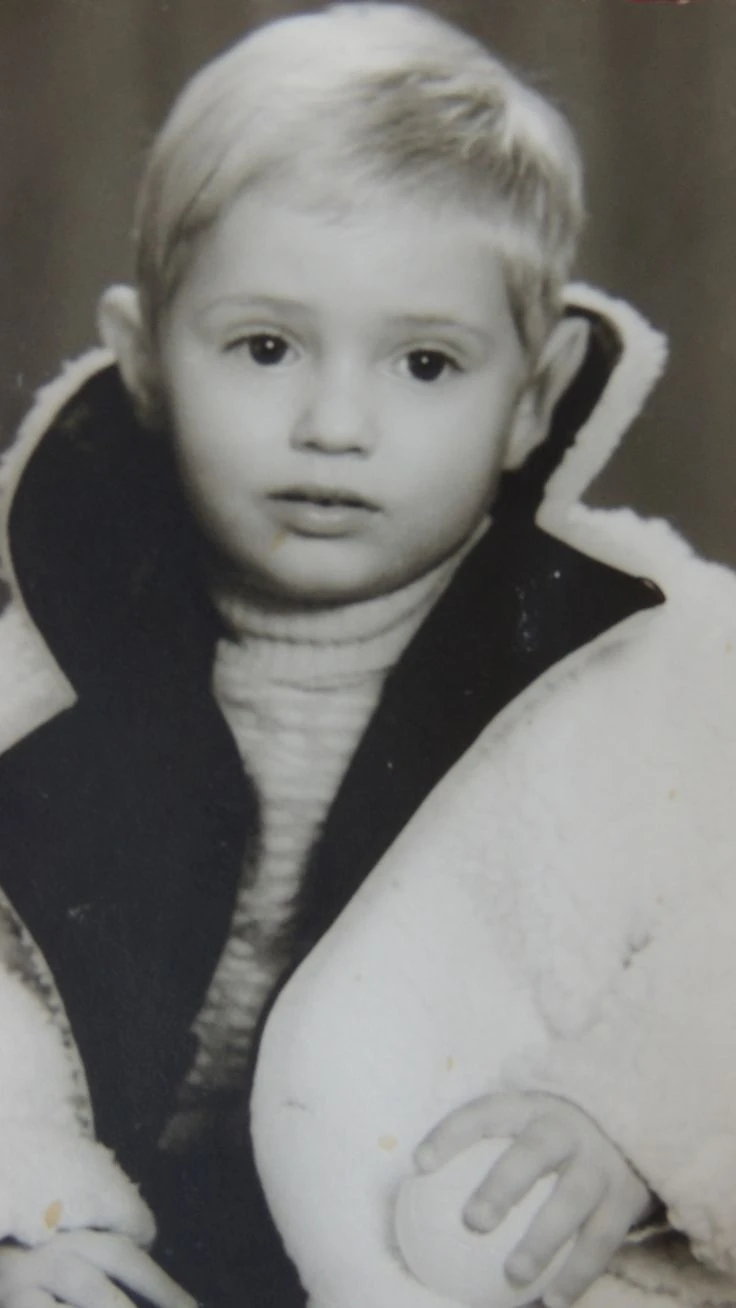
Peter Krug. As a toddler
Peter Siegfried Krug was born in Austria. On 23.11.1966 in the Salzburg State Hospital ( LKA), Müllner Hauptstraße 48, at 2 o'clock 45. Peter Krug's life was very hard from birth. He had no family to care for him. He never got to know his grandparents, or his own father, or his own relatives. That is why he was often without help in life situations. His mother's name was Herta Brigitte Krug (Baptismal name - later she was married: Herta Bertel). She was an unskilled worker at the time. After she moved to Salzburg (Austria), she worked later for decades in the health department as contract agents until she retired. At first she lived at Müllnerhauptstraße 18 on the third floor in the city of Salzburg (Austria). A few months later she moved into a municipal apartment on the second floor at Goethestraße 12 in Itzling. This biological mother made the following statement: She met the biological father often in Kitzbühel. According to his mother his name was Dr. Peter Strobl and he worked as a doctor by profession. He was blond and tall. She was friends with the biological father in the approximate period 1962 - 1966. They went dancing in Kitzbühel (Austria). He already had a family. This doctor advised Peter Krug to have an abortion. His mother found it very out of character and disappointing. She did not demand alimony from the biological father. Peter's birth was very painful for his mother.
Instead of aborting Peter, the 22 year old birth mother put this illegitimate baby 1966 in an infant home. So Peter spent the first 2 years of his life in an infant home near the Salzburg hospital. Almost nothing is known of Peter's grandparents. His biological mother Herta Krug (married Herta Bertel) was born 21.12.1943 in Lessau in Lungau. According to the biological mother, the maternal grandmother was deaf - dumb for life. The grandmother was considered stupid in Lessach because of her deaf-muteness. His mother (married Herta Bertel) died on 12 April 2024 at the age of 80.
Kirchenstraße 33, Itzling (1968 - 1972)
After that he came in 1968 to a children's home (Kirchenstraße 33), which boys and girls took up to 6 years old. The home was back then closed and Peter Krug felt like he was in a prison. The environment in which Peter Krug spent day after day was always the same: either in the garden under the trees, or in a common room.The daily routine was strictly regulated. When was breakfast, when was dinner, and when was bed rest. There were no opportunities to retreat. The children had nowhere to hide. Every day there was malt coffee that Peter Krug didn't like at all -because it was always the same taste. He had no friends and no caregiver in the children's home. Sometimes he was picked up by the birth mother over the weekend. These were the few days when Peter Krug was allowed to experience freedom in the first 6 years. Peter was absolutely unhappy. Although he was not physically abused in the home, he was locked up in the basement. A young woman dragged little Peter down the stone stairs into the cellar and locked him up. At that time the door was still a wooden door with a simple lock. He was locked helplessly in the dark, but could see through a crack through the door. He could see the young woman smoking and watching. Later she disappeared. Peter was in a panic then. Days later, Peter couldn't walk without his knees trembling. He had the worst nightmares afterwards. Perfidious upbringing methods for the purpose of intimidation and fear were an integral part of this home. For example, 10-15 children were brought into the lounge at night. All children had to sit on the floor on the instructions of the minder. Then the woman opened the door that leads out to the garden. Before she left the room she said to the children: "Now the devil will get you!" Then she turned off the light and left us alone in the dark with the door open to the outside. - Once a year, on "Christmas Eve" and days after, the home children were picked up by their parents. Peter Krug still remembers exactly how he waited anxiously on that day to be picked up by their biological mother. But he was one of the few children who were not picked up even during the Christmas season. He was so saddened by this and cried continuously. His biological mother Hertha Krug (she was still unmarried at that time) lived at that time in a 34 square meter garcionaire at 12 Goethestraße, only about 80 meters away from the children's home. Peter Krug was so sad that he was not picked up by his mother at Christmas time. He and few other children were left behind in the children's home even on those days. It was a very sad time for the children. When Peter Krug saw that a door was open, he took the opportunity and escaped from the children's home. Crying, he walked up Sportplatzstraße and turned right into Goethestraße. After crossing Bognerstraße he was in one of the blocks of houses on the right where his mother lived. When he arrived and knocked on her door, his mother opened the door just a crack and told him to go back to the home immediately. It was one of the worst moments of his life for Peter Krug, because he could not understand that his own mother did not take him into her home even at Christmas. Peter Krug could not help but go back to the home. However, Peter Krug was allowed later to visit his biological mother alone on weekends when he was almost 6 years old.
Guggenthal 62 (1973 - 1978)
The time of severe memory problems at school
When Peter Krug reached the age of 6, he was too old for the children's home in Itzling and was taken to a Projuventute children's village in Guggenthal 62 (nowadays it was renamed Georg Weickl Weg 21) at the foot of the Nockstein (alpine-looking rock spikes 1042 m). It was 1972 that Peter Krug was put in a completely different environment in Koppl. He didn't own anything at that time. His biological father, of whom he did not even have a photo or knew his name, did not pay the alimony. Throughout childhood and adolescence, the mother never spoke a word about the biological father. Fortunately, the forest was immediately outside the house. Peter was allowed to play outside, hide and discover nature. There was a fixed limit to how far the orphans were allowed to go into the forest. On trees like beeches, Peter learned how to climb trees barefoot and tests of courage like jumping over almost meter high rocks. Very often the orphans also stayed on the stream and tried to catch trout. On other days they collected dead wood and made a simple forest hut out of it. Peter also learned how to make perfect paper airplanes, and the orphans had little contests in particularly windy autumn weather to see whose paper airplane would fly especially far. The orphans were out a lot in the summer without shoes and with leather pants. This forest became an escape for the orphans from the perceived joyless school and the tantrums of "mom" (educator mother Magarethe Leitner ) who watched over the children. On rainy days, the orphans sat in front of the TV in the evening before going to bed and watched "Maya Bee", "Kung fu" (TV series with David Carradine), or the US - American science fiction series Star Trek, "Raumschiff Enterprise" with Captain Kirk and Mr. Spock. Before the orphans went to sleep at 7 o'clock in the evening, or at the latest at 8 o'clock, they had to form a circle on the first floor, where the bedrooms were, all facing the center of the circle. With their hands folded, the children had to recite the "Our Father in Heaven"and then the apostolic creed every evenig. Peter felt really sick every time and developed irrational fears. But he was not allowed to escape this daily religious torture. He had a great aversion to this ritual and the horrible, Catholic beliefs made it difficult for Peter to fall asleep. - There was also a dog named Ajax, a Collie in the Projuventute children's house. This dog did not want any physical contact with the children and would only vocalize when he was hungry or when people came to visit. Every Sunday the children had to attend Sunday service, which began at 8:30 in the morning. For this, all the orphans had to put on ceremonial clothes that they had in their closet during the week and walk about 300 meters to the Filial Church “Heilige Kreuz-Kirche” in deliberate slow steps. The orphans dressed up in stooped pants, shirts and cloth ties, passed by the elementary school of the Georg Weickl Way and passed the old abandoned brewery ("Am Professorfeld") and the empty Valentin Ceconi villa until they reached the neo gothic church, whose buildings were all commissioned by Georg Weickl at that time. - At this time the priest Hans (Johann) Paarhammer (1947 - 2020) gave this sermon. Paarhammer was a prelate and honorary citizen of the municipality of Koppl. He later became a full university professor in Salzburg. The orphans had to take a special place in the front row of the church. It was scrupulously watched that the children absolutely got the host shoved into their mouths. For Peter, to whom all Catholic liturgy seemed incomprehensible and strange, even threatening, these religious ceremonies were torture. It irritated Peter every time when the priest talks about the devil and hell in church. Peter also did not understand why only the priest was allowed to speak in church and the visitors were only allowed to say "Amen" or "Praise be to the Lord." Peter did not understand why he suddenly had to stand up during mass, why he then had to sit down again, and why he had to kneel down. Therefore he never paid attention for a minute in church to what the priest was saying, but thought about what he was going to do in the forest after church. He had a deep aversion to all Christian customs and that Jesus should be the Savior from all sins only confused Peter. As soon as the mass was over, he was happy to step out of the church again and was allowed to talk and pursue his urge to move. After church, the children went with quick steps the way back home, where the dog Ajax greeted each time from far the children with loud barking. The orphans were already looking forward to Sunday dinner. Every Sunday they had baked chicken from the oven with rice and ketchup which the "mom" already prepared on a large table in the living room. The leftover bones got the dog Ajax. Because he received no intellectual stimuli and was not encouraged to read, he was far behind in terms of general knowledge and German language skills compared to other children of his age. For example his grammar was lousy. Here, only 100 meters from home he completed elementary school with Adi Hillimaier and Daniel Spitzl.
Structure at that time 1973 to 1977 in the Voksschule Guggenthal
All four classes of the school were taught by only two teachers.
While the first two classes at the same time were led by Anna Karl, Hugo Müller was in charge of the third and fourth classes.
Each teacher had to teach two grades at the same time.
There were 6 units of hours each day. At 7:40 in the morning the lessons began.
After about 1 p.m. the lessons were over.
Superintendent of Schools Hugo Müller (1914 - 2008) was the director at that time. In this school, he learned basic math and reading. Because he got the worst grades in mathematics in the field of elementary set theory, it spoiled Peter the joy in school. For him, the school grades were a psychological torture that brought him sleepless nights and permanent fears of existence. After all, the elementary school teacher Anna Karl had an idea why he had such bad grades. She discovered very late that he was partially color blind (red - green weakness) and therefore could not classify the colored geometric triangles. However, the unsuccessful mathematics was a trauma that was never dealt with, never discussed, and which accompanied Peter through the further years of school. Even in those early school days, Peter no longer enjoyed school and felt that school was a place of punishment and embarrassment. Bad grades were followed by a ban on playing, grounding and domestic physical beatings. Peter was punished in the home. He spent therefore a lot of time writing fine, instead of spending time in the forest in fair weather. This stupid occupation made no sense to Peter. At that time the children were punished also with cone arithmetic (e.g. 796 x (times) 2= , the sum x 3= , the sum x 4= …until the sum x 9= and then the sum : (divided by ) 2 …until the sum :9 should result in the same number at the end. In cone arithmetic, continuous multiplication and subsequent division produces a structure that actually resembles a pine cone in shape), or with writing the same sentence 100 times. These punishments were repeated many times and apparently served Ms. Leitner to control the children in their absence. In this rural region, Peter suffered severe physical abuse from this unpredictable woman in the advanced age (42 years) who had sudden outbursts of anger even hit defenseless children with chairs, brooms, belt and the unpredictable force of the hand. This woman named Mrs. Magarethe Leitner (1930 - 13.08.2018) was generally referred to as "mom" by the orphaned children. She was feared by the children because she had unpredictable temper tantrums. From the experience of powerlessness he made and the experience of not being noticed by anyone, Peter Krug reacted with silence and grief. He had to endure grief, lack of understanding and physical violence without exchanging these experiences with other caregivers and verbally processing them. The transition from the elementary school, which was less than 100 meters away, and the secondary school Hof was hard for Peter to bear. From now on he had to go to school with the bus full of children and every time Peter felt sick during the ride and almost threw up. In the secondary school itself he could not find any friends. He felt alone among the strange children and teachers. The additional bad experience of alienation became an insurmountable obstacle for Peter Krug. Peter could no longer fall asleep, or sleep through the night. In order to deal with the overwhelming fear of being beaten, Peter and the child of the same age named Adi Hillimaier (born 1966 in Salzburg) went outside school hours into the forest with the aim of being able to cope better with the physical pain. They looked for sticks and larger branches and hit each other on the back of the body and tried to endure the pain. Unfortunataly the physical resilience training that was practiced was unsuccessful. Peter was forcibly dragged into the cellar by his furious and impulsive "Foster mother". He fought back with all his might and screamed and was able to prevent him from being locked up in the basement again. She gave up just before the cellar door. At school in Hof he couldn't pay attention. In German class, the foreign teachers read a story that touched Peter so emotionally that he started crying in the middle of the reading. It was the famous fairy tale by Hans Christian Andersen: "The little girl with the sulfur woods".
The story hit Peter so hard because he thought he recognized similarities with his own life. The teacher had only read half of the story when Peter sank into the school chair, crying and oblivious to the rest of the story. Then the students had to retell the story in writing from memory.
This overstrained Peter emotionally. After the first sentences were written, Peter remained motionless and could not continue writing. Overwhelmed by his feelings, he could not put anything down on paper for the rest of the time until the exercise books were collected.
Instead of asking Peter why he did not write the story, the German teacher gave Peter the worst grade. Peter hid this at home and was terrified of further school exams. It was a chain reaction. It was impossible for Peter to remember what he had learned. He experienced a state of unstoppable uncertainty, the likes of which he had never known before. He could not pay attention at school at all and was "punished" for this with more bad grades.
Due to poor grades in the school, Peter Krug completely lost the ground under his feet. He got fits of suffocation. These attacks of suffocation repeated themselves in the evening and got worse and worse. At night, when everyone was asleep and he was lying in the dark in his bed, he was at the mercy of his fear. That drained Peter of the security. At first, he could not fall asleep at night because of tinnitus, hyperventilation, and tingling on the skin of his face. At school it had such an effect that he could only be present, but could no longer pay attention, learn or write. The great insecurity he had never experienced before paralyzed Peter to the point that he had considerable memory problems in school. The teacher didn't ask what's going on. Peter Krug got the worst grades in school. Peter found his impotence beyond words. Then came one of the worst nights of his life. He had another attack of suffocation at night that was so bad that Peter thought he was going to die soon. In fear of death he got up from bed and went to Adi Hillimaier´s bed and wanted to scream for help. But he couldn't scream. He couldn't get a sound out. He felt his helplessness and fell unconscious on Adi's bed. With the rescue, he was taken to the hospital at night. But there was not asked what the cause was, but Peter was wrongly diagnosed by Dr. Christian Gross with epilepsy. In the hospital he was given the pills that Peter secretly threw away. The attacks of suffocation stopped, thank God. Peter no longer needed to be afraid of being hit in the hospital. The suffocation attacks never repeated themselves later in Peter Krug's life. The caregivers could not understand the reason and so Peter Krug was brought to another Children's home. Peter Krug felt torn out and could not adapt to the new environment. His nocturnal shortness of breath (hyperventilation) shortly before falling asleep, caused by panic, was not known after the Salzburg regional hospital.
Children's home in Parsch (1978)
Since he was not beaten by the educators in the new children's home in Parsch, Aignerstraße 7a (across from Borromäum), he also did not have respiratory distress. Peter, 12 years old at that time knew that and so he always secretly threw away the useless tablets that were against the epilepsy. In this environment in Parsch Peter was teased and excluded by the other children. Peter had great difficulty adapting and was therefore very unhappy. After a few months he was dismissed from this home because instead of going to school in the Schloßstraße, he had stolen 2 orange juice concentrates and sweets from a grocery store. Around this time his biological mother married Dr.Michael Bertel and was then called Herta Brigitte Bertel (born 21.12.1943 - died 12.04.2024). For his mother, Peter was nothing more than a school failure and a problem child.
Nursing home, Zanderstraße 5, Liefering (1978 - 1980)
Therefore he was then taken to a nursing home in the Zanderstraße 5, Liefering, where he learned the rules of chess from a psychologist (1978). Unlike Guggenthal, Liefering had no forest and no mountain. Not far away are the famous Salzachseen. His classmates at the compulsory school in Liefering were children from abroad. Many children from low social class, who spoke poor German. The requirements of this school were so low that Peter did even no homework and did not study for exams. Gerold and Annamaria (so -called foster father and foster mother) didn't care about that at all either. Therefore Peter learned almost nothing in this school. It happened twice that he was stopped by children on the way home from school. During the way home through a meadow children came towards him. One of them hit Peter in the stomach. - His daily routine looked something like this: before Peter got up, he drank cocoa, which he got from the refrigerator. Gerold and Annamaria were still asleep at this time. Since there was often no bread, he went to school hungry and without a snack. The hunger was so agonizing that Peter once took advantage of a favorable opportunity to steal and stole sweets at school. He ate the sweet wafers in the toilet. After school he had to go home immediately and got bread with a liver spread from a tin can. Sometimes there was soup with noodles as an appetizer. Every day he got the same thing for dinner. At home, he sat alone in the a tiny kitchen until late at night. He had no playmates, schoolmates or friends. He had no one to talk to. In the kitchen he occupied himself with puzzles. Peter's task was also to collect grasses, leaves and herbs in the surrounding area for rabbit breeding. With wooden carts he drove along the roads even during the rain and plowed in the meadows these grasses. But he was forbidden to explore the area simply out of desire. Peter's conversations with Gerold and Annamaria were limited to the most necessary. Experiences, for example, or problems at school were never discussed. Joy and sorrow were never communicated. During this time, Annamaria Ladinig was sitting in the living room watching TV. She loved the Elvis movies. Gerald Ladinig (foster father of Peter) often came home very late during the week and usually he was drunk. Gerald Ladinig worked in the construction industry and his muscle strength was impressive and feared because he often had unpredictable outbursts of violence. It was not uncommon for him to strike with full force with his fist against other people, also against Peter. The punishment of Peter was carried out according to a certain ritual. Thus he was beaten in front of Annamaria L.. Another time Peter had to strip stark naked and lie on the bed until Gerold came. Gerold Ladinig wet his hands and then beat Peter's ass with extreme brute force. Peter screamed afterwards and ran naked through the whole apartment.
Once at home Peter had secretly cut some cake from a piece of cake.
He was punished for this by being given polenta to eat for the next few days.
- One night, Peter was already in bed, when a stranger with cigarette smell came to the bedside. This strange man with tattoos on his arm had strong muscles and ordered Peter to lie still in bed. This disgusting man smelled disgusting and had long hair. He took the blanket away and raped Peter. The man repeated this sporadically for several weeks until Gerold Ladinig caught this man with the tattoo in the act. In an adjoining room, this man was brutally beaten down with fists from Gerold in front of Peter for this deed. This strange man afterthen never came to Peter's bedside again. - One evening Gerold came back home drunk again. Peter was just sitting alone in the kitchen. Without words being dropped, and without any apparent reason, Gerold Ladinig hit with his fist directly in Peter's face. Peter's nose began to bleed and the blood ran into the soup plate. Gerold L. then became even angrier and again beat Peter with his fists until Peter was lying helplessly on the ground in a state of shock. After that, he tore Peter's shirt, and then disappeared. Afterwards, Peter lay alone in the kitchen in a state of shock until the morning. The next day after he could no longer go to school. The shock and fear of being beaten further was too deep. He was totally desperate and fled on foot without the necessary clothing and without money about 20 kilometers east to the mountains. He first walked from Liefering along the Salzach in the direction of Elsbethen, and then went up the mountain Gaisberg. At the beginning of the ascent, the evening sun was still shining horizionally, illuminating the grasses and brightening the stones in the restless ups and downs of the radiance. Then suddenly, from one moment to the next, the stones and the grasses stopped shining. The sun set and the mountain lost color and luster. Peter began to be afraid. He knew that soon it would become completely dark. The wind was blowing low as if from a big blowpipe. In a rhythm the leaves rattled more and more violently until it became calm again and this wind became louder each time. When it was already dark Peter Krug wildly sought out the slopes without protection and away from the hiking trail. It was difficult for Peter to hold on to anything. The stones were often loose. The grass and the moss covered areas slippery. Constantly steep he went further uphill until he suddenly reached the top of the mountain (1288 m). The unusual and the fact that Peter Krug desperately but death-defying reached the summit evening without a flashlight and without a path was decisive for looking for other options. He became aware of his power. Nobody was at the summit at that time. The wind whistled and the storm clouds changed constantly and quickly. It started to rain and it became cold and very dark. He was dressed only in a T-shirt and pants. At the summit he realized that there was still a lot in this world that he had not yet known. Life offers much more. Via the normal hiking trail he went downhill again. He longingly sought out the area in nature that was a retreat for him in the past. There he met the orphans he knew back when he lived in Guggenthal. Peter hoped that Adi Hillimaier, or Daniel Spitzl would bring him something to eat. Peter was thinly dressed and had no jacket with him. He needed a sweater and a raincoat and hoped that Adi and Daniel would provide shelter in their primitive wooden huts. He wanted to sleep in the forest and by no means back to the former "Mama". But the children betrayed his hiding place in the forest. When "Mama" found out, she was worried about him and so he couldn't help but go to the house in Guggenthal. The "Mama" (Magarethe Leitner, former foster mother) mistakenly believed that Peter had fled to come back to Guggenthal. The truth, however, was that instead of committing suicide, Peter wanted to return to the nature area in Guggenthal where he felt comfortable at that time. The "Mama" (Magarethe Leitner) immediately called his birth mother, who at that time was already married to a new doctor (Dr. Michael Bertel) and was named Herta Bertel. His mother then immediately called the police and Peter was brought back to Zanderstraße with the police and accompanied by his biological mother. On the way there, his mother showered Peter with accusations because of the escape. Peter was only a nuisance in his mother's eyes and an obstacle to being happy. - So late at night he was back to Liefering where he was beaten very often from the drunk, aggressive, more unpredictable, strong muscular man named Gerold Ladinig (1952 - 2003, he was a bricklayer by trade and a tiler). At the time, Peter Krug was not asked why he fled in the mountains.
Relocation to a new nursing home in Plainfeld (1981 - 1982)
Because Peter Krug fled from the former desolate family in Liefering, a psychologist looked for a new place in the rural area east of the city of Salzburg (Quellenweg 3).
Since Peter Krug never dared to talk about the brutal physical injuries, no one learned what the reason for the escape was. In Plainfeld he completed the last years of compulsory schooling in 1981 and 1982 (Hauptschule Hof). It was the fifth school.
During these two years Peter Krug was free from psychological and physical violence. He was quickly able to settle into school. His classmates were solidary and friendly. He was lucky to find a school friend just across the street from his new home. He also played chess with him and was even allowed to stay over at his place on weekends. But all chess players in the country played much worse chess than Peter.
Hermann Hautzinger was his first friend Peter had in his life so far. However, he did not receive any intellectual support in Plainfeld. No one in the country read books in their spare time. There were also no books available. The country people all had a conservative education and job. The curriculum vitae in the countryside was (and is) already pre-programmed: Elementary school, then secondary school, then perhaps an additional school to also get a higher post. Then working until retirement - always in the same job. In the free time, the television takes a central place as entertainment.
- After finishing compulsory school, Peter Krug knew almost no English and poor German. The level of education was very low at that time. After compulsory schooling, Monika Mittermayr (new foster mother in Plainfeld) looked for an apprenticeship for Peter. At this time Peter was going steeply downhill. Instead of attending another school he started an apprenticeship as a forwarding agent. The work there was so frustrating for him that he began to have great sleeping problems. Unrested and unfocused, he went to this apprenticeship, often late, and after a few months he was terminated because the department manager noticed that Peter was unhappy. After that, Monika looked for another apprenticeship at the Goldener Hirschen in the Getreidegasse as a waiter. His biological mother bought a waiter's jacket, black shoes and waiter's trousers for him. After waitressing, he took the bus from Miralbellgarten back to Plainfeld every day. - Because he was very shy with the guests, he often trembled when pouring the wine and promptly missed. Therefore, Peter had to practice serving without things in an adjoining room. But when it happened to him again during the serving next to the guest that he poured out a plate full of food while serving, he lost heart and did not want to work in the Hotel Goldener Hirschen anymore. Peter skipped work until Monika Mittermayr came along. Next, Monika Mittermayr found an apprentice waiter position at Peterskeller. Here he always had to learn the daily menu by heart. He couldn't get along at all with the other apprentices. Peter found teamwork difficult. He hated the physical work and carrying heavy plates at a hectic pace for very long hours. After a few months, Peter quit this job as well, again without telling Monika.
Deposed in the Kolping House (1982 - 83)
A life without perspective, friends and external help
After further unsuccessful attempts, Peter was assigned an unskilled job. He had to make stickers for advertising purposes with a machine at the Mark Youth Center in the Neutorstraße near the Siegmundstor. The more stickers he made, the more he could earn. Peter was not satisfied with this work either. He found the work very monotonous and felt mentally underchallenged. Since he was also unhappy at this job, Monika Mittermayr gave up and put Peter in a Kolping house, which at that time was in Franz-Josef-Straße 15 in Salzburger Neustadt. Into a free fall he lost contact not only with Monika Mittermayr and with Plainfeld, but also with all the possessions he had at the time. He lost his record player with all his beloved Abba - records and his problem chess books. He lost his folding bike and his only good friend, Hermann Hautzinger. In the Kolping House he had nothing to eat anymore. No one who cared about Peter. At that time, Peter had no plan on how to pay for his living. Peter fell so low, and this lack of support led to the neglect of his physical and mental condition. Day in and day out, he was preoccupied with the question of what it would be like if he committed suicide. The only self-respect he derived from the fact that he was successful as a chess player. However, he was deeply disappointed by the people around him and his beautiful moments were only the encounters with animals and nature, which he always loved so much. In spite of this halting, or precisely because of this halting, Peter continued his work as a chess composer. At that time Peter was mainly interested in the orthodox two and three movers. He was inspired by the great chess composer Otto Wurzburg from Grand Rapids. Since he also lost his chessboard, he often lay in bed and composed in blindfold chess style.
He composed the following chess problem without board view and pieces in the Kolping House:
White: Ke3, Qf8, Bc7, Nd7, Ng6, f6, c3, d3 Black: Kd5, Ba7, Nb7, Nc6, b6, b5, e6, g5 8/ 8 #2
White on the move mates in two moves. It is a Zugzwang problem. Only decades later he published this task in "Die Schwalbe" in october 2005 (12780 Die Schwalbe 215).
- At that time the beds in the Kolping House were still made of iron. The floor was made of plastic. There were two bunk beds in the room. Washing facilities and toilet were in the hallway. After weeks without food and without support, Peter was terribly hungry.This feeling of hunger and the attacks of dizziness became unbearable and so he began to steal white sugar. During the day because of the chess he went to the Café Mozart. In this traditional coffee house he tried his luck with blitz chess with a cash stake.
For a while he also enjoyed using "contra" to raise the amount while playing chess. He also looked for chess players where he could pretend a piece, or reduce his own thinking time to three minutes, instead of the usual 5 minutes. With the money he often earned quickly, he ordered hot sausages at the coffee house and drank black coffee non-stop. Before going back to the Kolpinghaus, he would buy himself another Käsekrainer, or Burenwurst at the Alter Markt 3 in the center of Salzburg, or a Bosna with Coca Cola and a few bars of chocolate.
Once, a regular visitor and chess player to the Café Mozart, Mr. Heinrich Prodinger (1933-1999) challenged Peter and insisted on playing with Peter for 1000 shillings. Prodinger (also known as General Prodinger) regularly played tournament chess for the chess club "Mozart" and had about 1800 Elo. He already had a few glasses of white wine behind him and so they played without a clock with high stakes.
That evening it was already very late and the waiter let everyone pay. Peter Krug and Heinrich Prodinger, however, were still engrossed in the high stakes game. The lights in the coffee house were turned off, which did not stop the two chess players from continuing to play. Until Prodinger lost the chess game. Instead of paying, Heinrich Prodinger spat on the chess board.
This was too much and they stopped playing. H. Prodinger was by now very buzzed from the alcohol. As they were leaving Café Mozart, they realized that they were locked in the coffee house.
Peter Krug, who was not drunk, looked in the kitchen of the coffee house for a spare key and found it. With this key, they were both able to leave the Café Mozart. Peter, however, took the key with him.
He did it with the intention of going to the Café Mozart at night and stealing cakes when the hunger became unbearable.
In the next few weeks, as a precaution, Peter did not go to Café Mozart during the day. Instead, he waited until it was very late and the Café Mozart was closed. Then he used the spare key to get into Café Mozart and ate cake from the kitchen display case. He did this at night for several weeks. In order not to get caught because of the repetitions, Peter threw the key into the Salzach after a few weeks. But after only a few days without food, Peter Krug began to have severe dizzy spells and felt very weak. He was afraid for his life. In the Kolpinghaus he desperately searched for leftover food that others had left behind. Sometimes he found a hard bread, mustard, or ketchup.
Since hunger continued to plague Peter, however, he climbed into the Café Mozart at night through the open window in the Getreidegasse and stole cakes again. When Peter at night, after stealing some cakes from the display case and eating them, wanted to get out of the open window again, he noticed that there were too many people in the Getreidegasse and it would therefore be too dangerous. Since he no longer had the spare key either, he was like locked up in Café Mozart. Fortunately, he found a window, the one to the "Niederleg -Hof".
Peter had to jump about 5 or 6 meters from the window onto an asphalt floor. Fortunately, Peter did not injure himself in the process. When he jumped down, driven by the fear of being caught, he realized that he was locked in the "Niederleg - Hof". Both heavy wooden gates, one to the Getreidegasse, the other to the Griesgasse were closed and locked. Peter therefore had to hold out in this courtyard from midnight until 6 o'clock in the morning, until someone finally opened the gate to Griesgasse and he could thus go back to the Kolpinghaus. Finally, he stopped stealing cakes, because it was too dangerous to get caught. Peter Krug was never caught or charged for these acts.
- From 1983 to 1986 were some of the worst years of his life. This period was characterized by a lack of stability, loss of his home, identity crisis, self-insecurity, disorientation and helplessness. It was months of great trauma. This sad time negatively affected the next decades of Peter's life. Peter Krug is still unable to talk much about this time.
The consequences of child abuse
Children suffer most from the mistreatment and mistakes of our society, because they cannot really cope with them and they have an impact on the rest of their lives. In adolescence and early adulthood the mistakes and abuse of parenting will have their effects.
In Guggenthal, Peter met several orphaned children of the same age.
These children were called Adi Hillimaier (born 1966), Daniel Spitzl (born 1966) and Reinhard Tutschko (born 1965). In Peter's opinion, they should never be forgotten:
As an adult, Adi Hillimaier could not do a regular job and slept homeless and alone with his dog in a hidden watchtower between ash, beech and sycamore maple on the Kapuzinerberg for 10 years in summer and through the entire winter. Every day he cooked his food and coffee with his campfire in the forest. Adi said. that he wanted to forget his sad childhood through his hard life outdoors. Unprotected in the open air, he was attacked with a knife and stabbed in the stomach with a knife. Adi was taken to the accident hospital and survived. Because of the Internet, Adi Hillimaier was able to get to know his biological mother after more than 40 years. He lives on the social welfare office and currently (2021) lives in a community apartment in northern Salzburg. Adi is now father of several children.
Daniel Spitzl, half Turkish origin came to the Borromäum private high school Salzburg after primary school. A boys school in Parsch. According to other children, he was allegedly sexually abused there. Daniel Spitzl was later adopted. As an young adult, he died of a drug overdose. Daniel was a very calm, rather introverted person.
Reinhard Tutschko was very athletic and went to judo classes. As a young adult, he loved promoting children in sports. After Reinhard was caught by the police for stealing, he was taken into custody in Schanzelgasse, Salzburg. As a young man, he hanged himself in custody. He died very young, estimated to be 20 years old.
What happened to Magarethe Leitner and Gerold Ladinig, who severely traumatized Peter physically and mentally? What personalities did they have? What were their hobbies?
Magarethe Leitner and her husband Johann Leitner moved with their sons from Guggenthal into a new own house with garden on the Saalach border in the Rechte Saalachzeile 10. Opposite Freilassing. Here the couple spent their pension. The orphaned children grew up. None - except Peter Krug - of the former Projuventute children visited Ms. Leitner. Nobody wanted to be in contact with her after such a sad childhood. She had done great harm to the children. Peter Krug visited Ms. Leitner after more than 40 years. During the visit, however, it was impossible to talk to her about the body abuse. Ms. Leitner showed no insight into how her outbursts of anger combined with beating with objects such as chairs and belts caused psychological damage to the orphaned children and severely impaired their future lives. 2016 Magarethe Leitner became seriously ill with dementia, she and her husband, who had since become complete blind, were taken to the old people's home in Itzling, where she passed away on August 13, 2018. She was 88 years old.
Postscript: Her husband Johann Leitner died 4 years later, completely blind, on March 16, 2022, in a nursing home in Itzling. He lived to the age of 95. Johann Leitner never harmed an orphan, although he himself was beaten as a child. He was a quiet and reserved person. By profession he was a trolleybus driver. In Guggenthal he also ran a beekeeping business.
Gerold Ladinig (30.11.1952 - 05.06.2003) himself was a child in the home for disabled people. His experience of physical violence at the home was the justification for brutally beating Peter. Gerold L. continued to drink a lot of alcohol. Mostly beer. All his life he could not control his outbursts of anger, which was often related to the fainting he experienced as a child in the children's home. His life was mainly characterized by hard physical work in construction. He had hardly any time for hobbies. Sometimes he went fishing with colleagues at the Salzachsee. Sporadically he could spend the weekend with Annamaria Ladinig and Peter at the Mattsee with other people to campsites. Since Gerold and Annamaria did not own a car, they rode together with work colleagues in a service bus. Gerold had no children of his own, and never played with Peter either. When Gerold already had a certain alcohol level he talked about his time when he was a child and was in the children's home. He recounted a particularly harsh method of punishment for children. A child was covered with a large blanket and then other children were allowed to beat this child. Gerold also showed a group photo of him with the other children from that time in the children's home. He emphasized how malnourished he was in the children's home. And expressed his pride that he managed to complete an apprenticeship as a tiler despite being in a children's home for the severely educated and often emphasized how much he achieved in life through his own efforts. In appearance, Gerold was of average height, had black hair and a muscular build. He was stronger than his colleagues at work. - Gerold however had never apologized for his outbursts of violence and rage. In a fit of rage, he often bang on locked doors or bang his fist on the wall. He died of leukemia at the age of 50 on June 5, 2003 and was buried in Maxglan Cemetery on July 30, 2003. Shortly before Gerold died, he regretted his mistakes and said that cancer is his just punishment. His wife Annamaria Ladinig (1955-1987) died of stroke many years earlier at the age of 32. Since she suffered from diabetes type 1 at an early age and had pus sores on her legs, her life was limited to being a housewife. Her job was to buy groceries and keep the apartment clean. The only contact she had with other people - except her husband - were her mother and brother Stefan Lazar, who lived on the upper floor of the house. Often her mother came down to Annamaria's apartment and discussed or watched television together. Apart from watching television, she had no other hobbies. She was ice cold to Peter, rarely dignified Peter with eye contact, and acted as if Peter didn't exist. She was physically very weak, lean and often locked herself in the bathroom to avoid being beaten by the angry husband Gerold Ladinig. She also received death threats from Gerold, but she had no way to escape. Anna Maria Ladinig was buried with her original surname Annamaria Lazar in the cemetery Liefering.
Adolescence:
Peter Krug had great learning difficulties because of the acute difficulty falling asleep and staying asleep and after school he had to take on jobs that he didn't know what to do with. He wasn't even asked what he would like to do in the future. Therefore he experienced further frustrations in the workplace. Again and again he ran away from the apprenticeships offered to him. Because of the many sleepless nights and the great unspoken dissatisfaction, he capitulated. After all, hardly anyone cared about him. He became stronger interested in chess and often went to Mozart café in the Getreidegasse. There he flashed with other good chess players (5 minutes thinking time per person) and could make with success some money with it. With this money he went to the nearest sausage stand and bought 2 or 3 nut chocolates with Coca Cola. That had to be enough for the whole day. He only earned so much money that the excruciating hunger was over. He often felt dizzy and very weak. Once it was late in the night. He hasn't eaten anything all day. He was still hoping to get something to eat in Café Mozart. But that evening he was out of luck. The Mozart Café was pretty empty. The waiter in charge was nowhere to be seen. He used this short time and stole cakes from the cake cabinet. Then he went to the toilet to choke that cake down quickly. His fear of being caught as a thief was great. So he didn't want to flee through the exit door. Instead of going down the stairs the usual way, he turned left into a small, deserted room. He opened a window that led into the courtyard and hopped out of the window onto bare asphalt at a height of six meters. It was dark. Fortunately, he didn't injure himself and fled. Since earning with chess was not possible in the long run, he had to get by for up to a month or more without money and was starving bitterly. Despite the existential hardship, hunger and unemployment, he composed orthodox chess problems on a small chess board and solved tasks from German problem chess books. He had great admiration for Ado Kraemer. He published his own composed chess problems in the Salzburger Nachrichten, making himself happy for his birthday. His other interests were philosophy. He read a lot from Arthur Schopenhauer “About the nothingness and suffering of life” and found confirmation that life is a lot of suffering and that people are driven blindly. Life is for Peter a hell and the people are cruel. Peter was convinced that it would be better if he had never been born. Peter did not know how he could survive the next time and also had no permanent residence, therefore he could not become a member of a chess club or take part in official chess tournaments. The times in the winter when Peter Krug walked alone through the nights without accommodation in order not to freeze to death were hard. Completely dispossessed, he strolled through the streets of Salzburg. Forgotten by all the people who once knew him. To warm up in winter, he looked in the morning or in the afternoon for public places like the Salzburg University Library. He had no tent, nothing to sleep, and no gloves or hood, therefore he had no other option and wandered around through the night. Afterthen he was exhausted because of the acute lack of sleep. Since he was so often neglected and abused in his childhood, Peter had very poor self-confidence and self-respect. He always doubted himself. He never learned to take care of himself and to look good in society. Therefore, he walked around with bad, unwashed clothes and did not shave. His cheap shoes were worn out from being worn and uncleaned. Throughout his youth he could not look authorities in the eye. He had no one to lean on and no one helped him. Peter Krug however was unable to complete a commercial training in the field of work because of the very stressful childhood traumas that left him speechless for decades. In addition, Peter Krug was only able to present his bad school reports at work presentations. His general education was very poor. In school he learned little more than writing and reading. He was ashamed of his bad school grades and destroyed therefore his school reports. As a teenager, Peter had to struggle with identity insecurity every day. He dealt with psychological problems with himself. He was easily injured and reacted to conflicts by withdrawing in nature, reading philosophers' books and studying chess problems. He often brooded over past verbal injuries. In the oldest bookstore in Austria, the Eduard Höllrigl bookstore, there were still enough problem chess books by Werner Speckmann. Books that were worth a visit for Peter at that time. In this historic 16th century house he tried to forget a little about his borne self-doubt and his deep self-insecurity. Peter practiced blind chess early on. He worked on chess problems and worked them out without the help of a board and pieces. Mostly it was mate in two moves and more. In addition, he did not always write down his chess problems in his youth, but contented himself with keeping them in mind and showing other chess players his chessproblems at hand.
Difficult relationship with birth mother.
Peter Krug was separated from his mother from birth. As a toddler, Peter was allowed to visit his mother once a week. The visit was always characterized by speechlessness and permanent accusations of guilt by the mother. Peter could never understand this blame and when he returned to the home this blame had a very negative effect on Peter's mind. Unfortunately, each visit with the mother always followed the same pattern. Peter could not cope with this emotional burden of constant blaming and in school it led to him not being able to develop an interest in learning and not paying attention in class.
Thus, he often became an outsider at school and his mother labeled Peter a failure because of his poor grades in school. Insecurity and gnawing self-doubt and being an outsider characterized the entire later school years and led to his inability to perform as required. Freeing himself from this negative spiral and building up a sense of self-worth was the content of his entire later life.
Inspection of files denied by Salzburg municipal authorities
Every child who comes to a children home, or to a foster home has a file from the Youth Welfare Office, where the childhood and adolescent history was noted. Peter Krug has often telephoned the magistrate of Salzburg to express his wish to have access to the file.
After repeated calls he was told that it could take several weeks. Peter Krug then also contacted the Salzburg Magistrate again a few weeks later. Even after many years, Peter Krug has not been able to inspect the files! It was apparently refused to him.
Young adult:
Peter Krug suffered tremendously from childhood, when he was left in the lurch most of the time and his talents were not encouraged. Early adulthood was torture for Peter, and the unprocessed childhood experiences an obstacle to whatever he was doing. He was plagued by fears related to intimidating upbringing and the ineffectiveness of his life. He seldom visited his birth mother. But even in adulthood she did not help him, but showered Peter with blame and allegations from the past on each of his visits. For his mother he was just a good-for-nothing who got nothing in his life. With every visit she repeated like a prayer wheel that Peter broke off everything he started.
Years later:
Since the suffocation in Guggenthal, Peter has had to struggle with serious sleep problems the rest of his life. - The self-insecurity, triggered by the consequences of the suffocation attack, was permanently formative for the rest of his life. The loss of confidence in himself made Peter permanently defenseless from mad attacks from other people. His ever-present self-doubt made it impossible for him to perform well, or even to concentrate on a book, or to concentrate on a job. Whatever he was doing, he could only half concentrate.
For over 40 years, Peter Krug hoped to get affection from his mother. But after he always was frustrated and depressed after a visit with his mother, he completely gave up hope with his mother. Through research and conversations with people he had known in the past, he came to the realization that his mother almost ruined his life through her destructive behavior. She never played with Peter and she couldn't have normal dialogues with him without burdening Peter with the same accusations over and over again. A reconciliation with the mother was until now impossible. He called on Christmas Eve, only to say that there would never be another meeting. After some very difficult years with no prospects for the future, partial homelessness, sporadic famine and lack of property and psychic hell he worked in the cinema of “Elmo Kino Salzburg” as a trained cinema projectionist for many years and then as a night porter in various 4 star hotels like “Hotel Stein", “Blaue Gans”, “Hotel Auersperg” or “Hotel Elefant”. He started yoga due to stress and severe serious sleep disorders. So Peter Krug got back into balance and could sleep again. He did the yoga teacher training in the “Yoga Vidya Seminarhaus Westerwald” in Germany and also composed chess problems and chess studies. In 2016 Peter Krug and his girlfriend Nadia Cipriani (Artist and oriental dancer) moved from Salzburg to Hallein in Tennengau. In 2017 he became FIDE Master in chess composition. In Hallein, Peter Krug developed a new passion for the Barmsteins in every wind and weather and learned free climbing without aids or rope. By the way he also photographed nature.
Unspeakable agony and fear for life
Peter Krug did not manage to talk about his torturous childhood with Magarethe Leitner, Johann Leitner and Gerold Ladinig and still carries the childhood traumas and paralyzing fears within himself.
In 2010 Peter Krug contacted the former educators. But neither Magarethe Leitner, nor his own biological mother was willing to learn about Peter Krug's psychological misery.
The lifelong repression of past psychological and physical violence lasted until death.
Peter Krug made one last attempt and visited Johann Leitner - the husband of Magarethe Leitner- in the retirement home. He was lying alone on the sofa. He had been completely blind for years.
His wife, Magarethe Leitner treated Peter Krug very badly. Krug was abused as a child and was taken to the hospital by ambulance.
- But Johann Leitner 2021 refused to talk to him. His last words spoken to Peter Krug were, "At this time I do not want any visitors." Johann Leitner died a year later at the age of 95 in 2022.
The anger, the suffering, the powerlessness, the lack of communication accompanied Peter Krug throughout his entire life. The childhood traumas isolated Peter Krug all his life and deprived him of the possibility to open himself emotionally.
Unthinking people talking can bring Peter Krug into his unresolved fears. Talking about psychological conflicts, inhibitions and fear is still difficult for Peter Krug even after 40 years.
Peter’s family background
Apart from his mother, Peter has never seen his father, or a photo of his father, or his grandfather or grandmother and does not know any of his relatives.
All he knows is the little information he has from his mother (married Hertha Bertel): According to his mother, his father's name was Dr. Peter Strobl.
According to her story, Herta Bertel (born Krug) is said to have been an unmarried child herself as a child. She was born in Lungau and soon she was given away to other nursing homes. She came to a farm as a child and was soon employed as a worker. Like Peter Krug, his mother was a bed-wetter and was mocked for it in the area. She then went to the hospital repeatedly because she was so starved. As a young adult she came to Salzburg and got a job in the health department without having had any training. In Salzburg she met Mr. Dr. Bertel, whom she later married.
Fight against displacement
The painful childhood experiences shaped Peter for the rest of his life. Only by temporarily forgetting the brutal abuse could Peter get on. It is impossible for Peter to think about the humiliating experiences for a long period of time without having difficulties coping with everyday life. Events in the present and in the media can throw Peter Krug off balance when unprocessed experiences come back into consciousness.
The slow slide into juvenile delinquency
The time after 1983
A more detailed description
In the meantime he came to a place for young homeless people. It was in in the Werkstätterstraße 4 in Itzling. At that time on the first floor. There was a common room with armchairs and table, some games and a small kitchenette. In the kitchen was always bread, butter, tea, sugar, salt, cooking pots and so on. Every young person had to take care of lunch and dinner themselves. There was room for about 8 people in the two bedrooms. Alcohol was strictly forbidden. At that time it was run by the health psychologist Dr. phil. Helmut Bieler from Bischofswiesen. It was a crisis site for teenagers. Young people from disadvantaged social classes, from disruptive families and young people who had already had many experiences with violence were thrown together here in this place. The language of the youth was not polite, decent, but provocative and challenging. Many contradictory spirits. Expressions like moron, asshole, shrunken brain, wanker, stupid deranged fell like hail in every dialogue. Some of the young people seemed hardened, and mutual contempt or disdain were palpable in all interpersonal interaction. Aggression was omnipresent. While Helmut Bieler was available in the morning, in the evenings and during the night there were mostly paid students who looked after the stranded and uprooted youths. Peter could usually do nothing with most of these young people. He could not talk to the other young people even for a short time and preferred therefore to talk to the paid students. At that time, Peter K. had no plan at all how to shape his future life.
There he met a young person of the same age with whom Peter strolled the streets of Salzburg. His name was Hermann Hraschan. His parents lived in Puch near Hallein. He was often brutally beaten by his father and was already in various youth homes from which he often fled. This new Youth friend showed him how to break into open car doors and, if he was lucky, even steal money. The car doors had pivots back then in the 90s. When they were up, Peter and his childhood friend knew the door was open.
Finding these open cars was fun for Krug. It allowed him to forget his mental anguish. So the two of them stole a lot of crap from the cars. Very, very rarely they could also steal money. But once they succeeded and that was their undoing. They stole 3000 shillings from the car and fled on the Mönchsberg. There they shared the loot. Hermann Hraschan and Peter had one thing in common: they were desperate to escape from the area of Itzling. With the money they still had, they took the train to Kufstein. There they visited the fortress of Kufstein, went to nightclubs and spent the night in a garden. The next day, however, they unintentionally lost each other. Since Hermann H. had all the money with him, Peter had to find his way back to Salzburg alone and without any money. That's about 114 km. At night he wandered in the direction of Salzburg many hours and was later able to get back to Salzburg by hitchhiking. He was allowed to ride in a long-distance truck. - Hermann Hraschan and Peter often went to the youth center which used to be on the second floor at Linzergasse 72.
Here Hermann got Peter to join him and suggested that they both meet together in the courtyard of the Glockengasse because he had something important to discuss. The exciting news Hermann had to tell was that he had over 20 000 shillings (converted that would be 1453 €). He said that he had found them in an adjoining room and offered Peter to go to Vienna with the money. But not by train - but by cab! Peter, who had never experienced anything so exciting, agreed and so they both drove to Vienna. It was already late in the evening and they first got themselves a hotel. The money was very well hidden by Hermann Hraschan in the room of this hotel. After that they both went out for dinner and then to different night clubs to dance.
The next morning, before Hermann and Peter woke up together in the room of the hotel, someone knocked at the door.
It was a detective. He looked for something in the cupboards and found nothing. Then he went out again. Hermann and Peter went swimming the next day in an indoor swimming pool in Vienna. Afterwards, Hermann read in a newspaper article that an amount of 20,000 shillings had been stolen.
Hermann Hraschan then told Peter the whole story and confessed to having found the money in an adjoining room in the youth center and to having run away immediately.
After a few days, Hermann and Peter went back to Salzburg. Hermann hid the remaining money in an underground canal in Salzburg.
First room in the district of Riedenburg in Salzburg
His first room in Sinnhubstraße 6a, where Peter was completely on his own, was provided by the Youth Welfare Office. It was a very small room with a winding lattice window in front of it. Costs for rent and food were covered by the youth welfare office. However, Peter's living expenses were so low that he could afford almost nothing except food. Thus he was excluded from all public cultural and sporting events for reasons of cost alone.
He also could not become a member of a chess club because he did not know how long he would continue to receive social benefits. The rented room was full of furniture and objects. The wardrobe was also full of other people's clothes that did not belong to Peter.
Peter had few possessions at that time. These consisted of a record player and a kettle. He made tea with the kettle. In the evenings, he liked to listen to music by Mozart. He especially liked "Eine kleine Nachtmusik". In addition, he had a tournament chess board. He started composing in the evening and did not stop until dawn. He neglected his sleep very often at that time because of chess composition. At that time his chess compositions were published weekly in the Salzburger Nachrichten and he even got money for his chess problems from Mr. Schneider. He was admired by the chess players who knew Peter. He also already got 15 - 20 tournament chess boards with pieces and was allowed to teach chess lessons to other youngsters in a youth center near the Mönchsberg elevator in the city of Salzburg. Unfortunately the chess lessons were voluntary at that time and therefore disbanded after a few months. Mr. Schneider passed away and Peter stopped publishing chess problems. During this time he got to know Conny by playing table football together. He was older than Peter and at that time he was studying for his Matura. He spent a lot of time together with Conny in the city of Salzburg. They went swimming together in Leopoldskron, hiked over the Mönchsberg and went to the city cafés together. Conny was very interested in Sigmund Freud and loved the music of David Bowie. With his friend Conny also went a lot to the youth centers of Salzburg and got to know Wilfried Raith (born August 27, 1959 and died June 5, 2022) there. Wilfried Raith was a prominent social counselor und self-advocate in Salzburg who often met with young people. Wilfried Raith was also an active representative for the disabled in the city of Salzburg. This social consultant liked to stay in Saftladen, or other pubs to - as he often said - do social studies. Wilfried Raith suffered already at that time from an incurable paralysis and can move for years only with the wheelchair. His main concern was therefore the fight for equal rights for the disabled, as well as for people living on the margins of society below the subsistence level. Wilfried R. described himself as an "expert in his own right". Conny, Wilfried R. and Peter K. often went together in the evening to pubs like the Humboldstubn in the Gstättengasse. Wilfried Raith analyzed and talked a lot about the social conditions of others on this occasion. His main interest was the socially disadvantaged, or disabled people. (Supplementary addendum: Wilfried Raith, an outstanding personality of the Salzburg youth scene and the struggle for self-determination died on June 5, 2022.)
- After Peter often had Hermann Hraschan and other youth friends in his room in Riedenburg- also over the night - the white haired and old landlady no longer wanted Peter.
Glasenbach First Part
After the landlady kicked Peter out on Sinnhubstraße, he got a rented room in a rural area in Glasenbach (Lohäuslweg 9) with the help of social worker Sieglinde from the youth welfare office. A few minutes walk away was the mountain river "Klausbach". During this time he received money from the social welfare office. Because of the greater distance to the city of Salzburg, Peter lost many contacts with the chess players in Salzburg. Instead, he became interested in the 200-million-year-old rock formations in the Glasenbachklamm which were exposed by the mountain stream. More intensive occupation with nature and intensive occupation with the philosophy of Arthur Schopenhauer ("Die Welt als Wille und Vorstellung") and Friedrich Nietsche ( e.g."Götzendämmerung") dominated his everyday life in this area.
His life in the village Glasenbach
He bought chocolate with yogurt, waffles and the big Coca Cola bottles with the social money. On Sundays, when the grocery stores were closed, he bought a beer from the pub and salt sticks to go with it. This inn was only 20 meters away from the house where he lived. Although the use of a communal kitchen was actually allowed, Peter never cooked and never cared about healthy food. His neighbor on this floor was a chimney sweep. This chimney sweep drank a lot of alcohol and used the kitchen intensively. Unfortunately, Peter did not get along with this chimney sweep and it happened that both of them fought in the kitchen. His day was filled with reading sophisticated philosophical books by Schopenhauer ("Die Welt als Wille und Vorstellung") and Nietsche. He also became interested in Lao Tse. A chessboard was always near him and so he replayed beautiful chess studies by famous masters like Mattison and Kaminer.
At that time he was also addicted to soluble coffee and got severe stomach aches and diarrhea because of his unhealthy diet.
Peter was very skinny at that time. His face sunken, often unshaven and unkempt. He usually went to the city by bus without a bus ticket because it was too expensive for him. An inspector who checked the passengers was very rare at that time. In the city center Salzburg he had only the Café Mozart in mind, where he regularly blitzed with chess and watch. At night he walked 5 kilometers via Parsch and Aigen back to Glasenbach. He had no girlfriend at that time. After a few months he got to know the landlady Gerhild Hirnsperger better. She lived one floor up in this house. He was also allowed to go to the landlord's apartment later and got to know the whole family. Gerhild H. often prepared meals for Peter. In Glasenbach, the Hirnsperger family were the only people he knew and had contact with. When the occasions came he played with their daughter Ingrid. This family also had a dachshund named "Purzel". Playing with this dog were rare moments for Peter of lightheartedness. Gerhild worked part-time as a nurse in the home health care and afterthen took care of the house and their three children (Ingried, Hupert, Wolfgang) and their dachshunds. Her husband Hans usually came home late. He worked as a teacher in a vocational school. -
When Peter was not at home in his room or not in Café Mozart, he was in the Glasenbachklamm. This is a three-kilometer-long section of the Klausbach River valley, which was formed after the last ice age. The gravelly path first leads over a small stone wall and always goes slightly uphill. Moss-covered stones and tree trunks, the clear mountain water rushing deep below the path and the constant roaring sound gave Peter some peace. On other days he made small hike on foot from Glasenbach to Erentrudisalm, or Schwaitlalm.
In these inns he read the demanding books of Friedrich Nietsche like "Menschliches, Allzumenschliches" to get distance to the inculcated Catholic dogmas and the Christian metaphysics he suffered so much from. - He spent a lot of time in this natural and humid area of the notch valley (also called V - valley) in desire to heal his deep psychological wounds of childhood. - At that time, the rent for the room and for daily living was paid for Peter by the social welfare office. The youth welfare office took care of it. The money Peter received from the social welfare office for living expenses was so little that he could only pay for the food with it. He could not afford a bicycle or travel by train. Even a bus ride was too expensive for Peter at that time.
So that he could buy philosophical books, he saved with the food. Therefore, Peter always did his errands on foot. In his room, which was furnished in a peasant style, he also had a record player. He loved classical music at that time. Especially PIANO CONCERTO NR 1 IN B MOLL OP 23 by Tschaikowsky, Bolero by Maurice Ravel and Beethoven´s Symphony No 5.
A lot of chess problems he had composed and written down on pieces of paper he sent by letter to Werner Speckmann. It came at this time but not only publication of his chess tasks.
Glasenbach Second Part
Like a bird with broken wings
- Through Gerhild Hirnsperger he got a very good job as a kindergarten teacher in Elsbethen.
This half-day job (6 hours per day) was the first work that Peter liked very much. It raised his self-confidence and for the first time he could afford something more with the money than just shopping in the supermarket.
The children in the Elsbethen kindergarten loved Peter because he was good with the children and played soccer with them.
Since the kindergarten's employer was also very happy with Peter, he had a very nice time there for a while. Reporters even came to the kindergarten and Peter was interviewed because he was one of the few males working in the kindergarten at that time. So he even got on the radio because of that.
This went well until the children, with their light-heartedness and directness, awakened Peter's heavy, unprocessed childhood traumas.
Peter found it increasingly difficult to put away his reactivated traumatic childhood experiences at work. Peter was then no longer able to repress this great suffering at home. He listened obsessively loud to classical music for many hours. Peter did this to escape the prison of his fears. At work in the kindergarten, he was less and less able to concentrate on the present and made embarrassing mistakes that he would never make before. This embarrassment was insurmountable for Peter. The last time he went to kindergarten, he stood outside and could no longer go inside. For about 15 minutes. His own childhood memories plagued him too much. Old fears from times past dominated his daily life. Peter could hardly listen attentively and focus on the mundane.
For this reason, Peter lost his beloved job as a kindergarten teacher. From this point on, Peter's life went steeply downhill. The road to crime was no longer far away…
Glasenbach Third Part
More criminal actions with youth friend Hermann Hraschan
One night, when Peter was already asleep, Hermann Hraschan slept through the open window into the room in Glasenbach. Hermann H. had nothing to sleep for, so he asked Peter to spend the night. So Hermann and Peter continued to stay in contact. The next weeks both tried their luck again with stealing from open cars. But unfortunately they could only continue to find all kinds of things, but no money. The stolen things they left for example under the Lieferinger bridge in the city.
One evening they stole again from a simple car near the Müllner church. This time they had no more luck. Because a woman observed this process from her window and immediately called the police.
It didn't take long for the police to catch them (Peter and Hermann Hraschan) in the act. In custody, psychological means were used to force confessions. So Peter was taken out of bed at night and brought into a room where a piercing, strong light was directed against him. The criminal investigation department threatened them with a long prison term if they did not confess constantly. Krug P. Peter's resistance was thus broken and signed a white piece of paper with a long list of thefts in custody that he did not even know he had committed. After that, he was sent to another remand prison in the Schanzelgasse 1. In the prison cell there was a bunk bed made of iron, a small wooden table, a chair, washbasin with mirror and a toilet. The window had double bars. Inside was a fine lattice. So fine that you could hardly see into the courtyard. One could hear the sounds of pigeons and at night the sounds of screaming prisoners in other cells. The light in the cell was not turned off completely overnight. The bed from an iron frame was uncomfortable, but the only one where one was undisturbed.
There was an additional small door in the heavy iron door where the prison food was handed over. In the morning there was black, unsweetened and watery coffee with hard bread without butter. At noon and in the evening there was soup and overcooked, tasteless food. Once a day the prisoners were allowed to go out into the yard for half an hour. There the prisoners had to walk together in a circle in slow steps. The courtyard was surrounded by very high walls. One could not see into the distance. Peter had never had so little exercise in his life as in this prison. After that the prisoners were taken back to their cells.
Every day the prisoners had to clean the toilet and the cell floor. Peter Krug lay in bed most of the time. He ordered demanding books by Shakespeare and Stefan Zweig, which he read strenuously. But in prison Peter had great problems with concentration and memory. He could not remember what he had read for long. For Peter, prison was pure stress. There was no television in the cell. But you could listen to the radio at certain times with a small headset. Sometimes his favorite song "Drive" by the band "The cars" was played. To pass his time, he wrote his own rhymed poems on slips of paper. In these poems he described his loneliness and abandonment. He showed these poems to a prison guard, who was very touched by them. Peter had to share the cell with another juvenile. When his fellow inmate confessed to him that he was mugging old women and taking their handbags, Krug became depressed. He no longer spoke a word to his inmates. Peter Krug was therefore very lonely in prison. He had the feeling that all his former friends forgot him. Once, however, he received a visitor in prison. It was a social worker named Sieglinde. She gave him some pocket money and so he could buy toothbrush and toothpaste and other things in prison. After a few more weeks in custody, Peter Krug got lice. He had to scratch himself everywhere until it became unbearable. All hairy parts of the body itched continuously. After he reported the lice infestation the entire cell was cleaned and the blankets replaced. Krug was given a remedy against the lice. Peter Krug spent a total of two and a half months in pre-trial detention. In a state of great dejection and the feeling of hopelessness he tried to take his own life. He slit his wrists with razor blades. Fortunately, prison guards took notice and stopped the bleeding. At Christmas he was released because Gerhild Hirnsperger from Glasenbach agreed to take him again into her home. Peter was allowed to join the family for Christmas.
For these crimes, Krug received a conditional prison sentence. At that time Peter was assigned to a probation office. The goal of probation was reintegration into society and avoidance of criminal recidivism. Gerhard Fink was his probation officer. This was located in a yellow house on Berheimer Straße in the Elisabeth - Suburb. Since he did not come back to court, he did not have to serve the prison sentence. Through this probationary service he discovered the Saftladen, which Peter later frequented for a while in times of homelessness and unemployment. After Peter was in custody, he lost his friendship with Conny and the contact to Wilfried Raith.
"Alter Fuchs" at the foot of the Kapuzinerberg
- After he also lost the small room in Glasenbach he got a room for rent in Inn “Alter Fuchs” in Linzergasse. It was late autumn. Hans Hirnsperger, Gerhild's husband helped with his car for the move to the city. Besides garments Peter had several dozens of philosophical books. The new room in this inn was even smaller than the one in Glasenbach. Except for a bed and small carpet was still an old wardrobe. In this wooden cabinet he kept his books, which took up much more space than his robe. The bed and the old wooden wardrobe took up almost the whole room. There was no window in the room. However, he could see through a window in the hallway into the Sebastian cemetery. Bathroom and toilet was in the hallway and were used together with others. There was no washing machine outside the room either. But he also never washed his robe. Since the room was so tiny and there was no way to store food in a refrigerator, Peter bought cheese krainer, chocolate and Coca Cola every day at the sausage stand at the Platzl which is still called "Heisse Kiste". - Here in this tiny room in the Alten Fuchs, which was smaller than a prison cell - Peter started having panic attacks when he came into contact with religious issues.
Peter tried to suppress the panic by drinking several bottles of wine a day. Traumatic childhood memories from the time when he was in Guggenthal came back to Peter's mind and he started hyperventilating more easily again.
It was winter and the streets were covered with snow. As he walked through Linzergasse one night he met a homeless stranger who asked for some money. Peter offered the homeless person to spend the night on the floor in his room. Afterwards he went to the sausage stand to buy the homeless something to eat. Meanwhile, the stranger was alone in this rented room. When he came back he was not allowed to return to the room. Chinese blocked Peter's access and explained in bad German that the foreign homeless man had beaten a child in the Inn “Alter Fuchs”. That's why the Chinese kicked Peter out of the rented room on the spot. Peter was not even allowed to go to his room and take a winter coat and other things.
From then on Peter himself was homeless for the first time. With the loss of the room in the inn "Alter Fuchs" he lost in one fell swoop all his possessions, which consisted mainly of books. From this point on, Peter also no longer received social benefits. - He wandered at night around the city of Salzburg in winter. In Obergnigl, a little outside the center he hoped to find accommodation in a barn. Finally he was able to take shelter in a horse-drawn wagon against the winter cold. Peter remained squatting for hours until the sun rose. Without winter hood, without winter shoes, without gloves. He had no blanket with him to protect himself from the winter cold. Sleeping was impossible because the toes, ears and hands froze.
Between of the year 1984 coming to an end and the beginning of 1987, Peter was often homeless. At that time, he was also not receiving social benefits. The reason for this was his very poor mental state.
He was severely traumatized by his painful memories. Violence in childhood and adolescence paralized him. His memories plagued him and his only means of enduring this excruciating pain was escape. Chess as an escape was not enough. Peter Krug tried to numb his psychological pain by becoming homeless. He lived homeless in the mountains, without being equipped for it at all. He had no sleeping bag, hardly any clothes and nothing to cover himself with. With the onset of homelessness, he lost all his possessions. No money. And therefore no purse. The cold was hard to bear and he could hardly fall asleep at night. He got big problems with hygiene. Even washing himself completely or wearing fresh clothes was a problem. With each new night of homelessness, he began to stink. His hair was unwashed and he had not been to the barber for a long time. He did not want to meet his old acquaintances and school friends because he was so ashamed of his condition.
The early years of adulthood
Active conscientious objection in 1984
At 18, Krug received a letter with a draft notice to be drafted into military service. At that time, Krug lived in a small room of only a few square meters in Glasenbach.
He had no older caregivers and had to decide for himself how to avoid the army. Basically, he was against joining the Austrian Armed Forces because they demanded unquestioning obedience and even killed people in case of emergency.
This did not correspond to his world view and his childhood experiences with violence and sexual rape. This much was clear to Krug: he did not want to continue the chain of violence and physical isolation he experienced in early childhood in his life. He was convinced that violence cannot solve problems, and wars are human tragedies.
However, civilian service as a result of conscientious objection was not an option at the time.
So Krug drove to Carinthia in a truck with other male draftees. In the truck, men talked about how it was possible to be judged as unfit, for example, to call themselves "gay" and to pass the tests as disastrously as possible.
This is exactly what Krug had done and was judged unfit because of these lies.
Peter Krug and his liberation from Christianity
The inculcation of Christian dogma in early childhood, such as the idea that unbelievers go to hell and are lost, caused Krug to have regular irrational panic attacks in his youth, which he could only numb with alcohol as a youngster. Philosophical books, such as those by Schopenhauer and Nietsche, helped Krug overcome his gradual mental enslavement to Christian thought. Consequently, he resigned on June 3, 1998 from the Catholic Church. For Krug, the path of freedom meant the abandonment of Christian thought. God cannot be proven, and the historical Jesus has little in common with the God-begotten Christian Jesus.
The Christian dogmas, the religious feelings of guilt narrowed the need for freedom too much. The fears were the result of this conflict. He suffered from an "ecclesiogenic neurosis." Peter Krug realized that the Christian thoughts were not his own and that the moral demands were exaggerated and foreign to life. Since the separation from the church, Peter Krug considers himself a lonely desert man in search of the truth. The only truth for him is that he can never grasp the truth as a whole.
Another important book for the release of toxic, religious thoughts was the book "God Poisoning" by the psychoanalyst Tilman Moser.
Interim shelter as a homeless person
Homeless center " WABE", Guggenmoosstraße 3, in the Liefering district.
Through a suggestion from someone in the Saftladen in the Bergheimer Straße, Peter went to the homeless center “WABE” (Association Salzburg housing and job creation cooperative non-profit GmbH) near to spend the night there. It was on a winter. Once a week Peter had to clean the stairs in return. The bedrooms were furnished in a makeshift manner. Peter slept on a mattress on the floor and shared this room with others. The homeless people there were nice. Together with a young woman he had met there, they took the gondola up the Untersberg and then took the ski back down to the valley. The skis and ski boots were lent by the association WABE.
For breakfast Peter got rolls.
The yellow house of the honeycomb made - seen from the outside - a dilapidated impression. (The WABE does not exist in this house now). This stay was only available for a bridging period about of three week. After that, Peter was homeless again. Sometimes Peter spent the night in a storeroom, sometimes he was allowed to spend the night with strangers. When he got money from the social welfare office again, he could afford to spend the night in a youth hostel in the Josef-Preis-Allee for a week. After that he was back on the street, without money, without documents, without possessions. Every day was a struggle for survival. Most people avoided Peter like a leper.
1987, the end of homelessness
Peter was homeless sporadic almost 3 years. During this time he lost all his acquaintances, his friends, all his books, all his garments and all his documents. His possession at that time was a plastic bag with 2 or 3 books of Nietsche. Since he had no clothes to change into, he stank. He also had no means to brush his teeth, shave or wash his hair. No sleeping bag, no backpack, no second pair of pants, no second sweater, no hood, no gloves, no money, no documents, no certificates - he had nothing. Nothing to protect against the cold and wet. The idea of begging never occurred to him. Especially particularly hard for Peter were the rainy days and especially the winter. In the summer Peter went on the Mönchsberg and spent the night sheltered with a few blankets in hidden meadows and places. The humidity outside made Peter very uncomfortable. He did not have the possibility of personal hygiene and he never thought about brushing his teeth. He also met a young homeless street painter there, who was sketching masterpieces by Albrecht Dürer from a painter's book on the ground in the Getreidegasse. In winter Peter often walked through the whole city at night just to avoid freezing to death. During the day he tried to warm up in a "Saftladen". This had opened at 9:30 am until 5 pm. This "Saftladen" was then still in the Bergheimer Straße 22 near the former Elmo cinema in the Elisabeth - Vorstadt. Peter discovered the Saftladen when he had an appointment with probation officer Gerhard Fink. At the time, the probation office was in the same building, just one floor up. The guests in this “Saftladen” were mostly long-term unemployed, criminals, mentally ill persons, homeless people, drug addicts, gambling addicts and alcoholics. In the Saftladen Peter ordered at the bar often ham - cheese toast and a black coffee. Nowhere else in Salzburg could you eat and drink so cheaply. Peter Krug had no possessions at that time, except a few Friedrich Nietsche books. Mostly Peter brooded while sitting alone at back tables. In the process, he repeatedly glanced at the Nietsche books. - He suffered greatly from self-doubt and every memory of his childhood frightened him. His self-confidence was very low and harsh words from others could very easily upset his mental balance. Towards other people Peter was very, very insecure. Peter - after being let down so much - could not look anyone in the eye. He had absolutely no trust in people anymore. - One evening he met a student in biblical form with brown beard there with whom he often got into conversation. His name is Felix. Felix was the first person who listened to Peter attentively and gave him attention and respect. In a hopeless condition and completely neglected, the closed Peter got to open up again. Felix was slim and smoked. He was of weak constitution. This student with the name Felix gave Peter his phone number and offered Peter to call when the winter night was particularly cold and unbearable. The month February in 1987 was bitingly cold. He couldn't imagine surviving another sleepless night without a roof.
And so Peter called from an old phone booth in the Saftladen the student Felix in the evening.
Felix gave Peter the address (Nußdorferstraße 17 in Riedenburg) to stay the night.
When he entered the house, the first thing he had to do was bathe and change his smelly clothes for clean ones. Felix (age 27 years)gave Peter a new pair of pants, a T-shirt, and a sweater. Then Felix made a warm coffee and a sweet cake to go with it. Felix was the first person since Peter was homeless to listen to him talk. Felix kept tugging at his beard as he did so. In Felix's room - only a few square meters in size - there was a mattress on the floor to sleep on. Next to it jumbled books and cigarette ash on the floor.
Peter was allowed to sleep on the floor in a small side room. Also the next days Peter was allowed to sleep. It was a shared apartment. There was a lot of discussion and loud music of "The Doors" and "Pink Floyd".
Young people who were all unemployed smoked hashish and were still drunk Alcohol "timeless" until next day the sun rose again. In this chaotic shared apartment he met his partner Lucia Nadia Cipriani (born February 27, 1955) at the end of March 1987. Lucia Nadia was the only one who had a job. Instead of helping to clean the apartment and helping to paint, Felix sat in his room, or in the common room, brooding incessantly and smoking one cigarette after another. He talked about society being degenerate and sick. Felix never laughed and could only discuss serious topics. After giving up studying at university, Felix wanted to train as a cab driver. However, Felix had not completed this training either. Felix (27 years old at that time), who freed Peter from homelessness, committed suicide after a few months later. He drove a car to the Untersberg and took an overdose of sleeping pills. His parents said that Felix suffered from depression.
After the crazy flat-sharing community in the Nußdorferstraße
A deadline in may 1987 was set after which everyone who was in the shared apartment had to leave the house. For the apartment handover, the rooms still had to be freshly painted and everything cleaned. Felix was at this time psychologically no longer able to help here.


Kommentare
Kommentar veröffentlichen